Bug in or bug out: how to decide before you have to
Stay home unless water, fire, toxic air or an evacuation order makes the house the danger. The triggers, the questions and the prep that let you decide in minutes.
When to stay and when to go, what goes in the bags, which vehicle, which route, and where the family meets.
Stay home unless water, fire, toxic air or an evacuation order makes the house the danger. The triggers, the questions and the prep that let you decide in minutes.
Other sections
 Threats and scenarios
 Grid-down living
 Stockpiling
 Home defense and security
 Communications
 Medical when help is delayed
 Family emergency plans
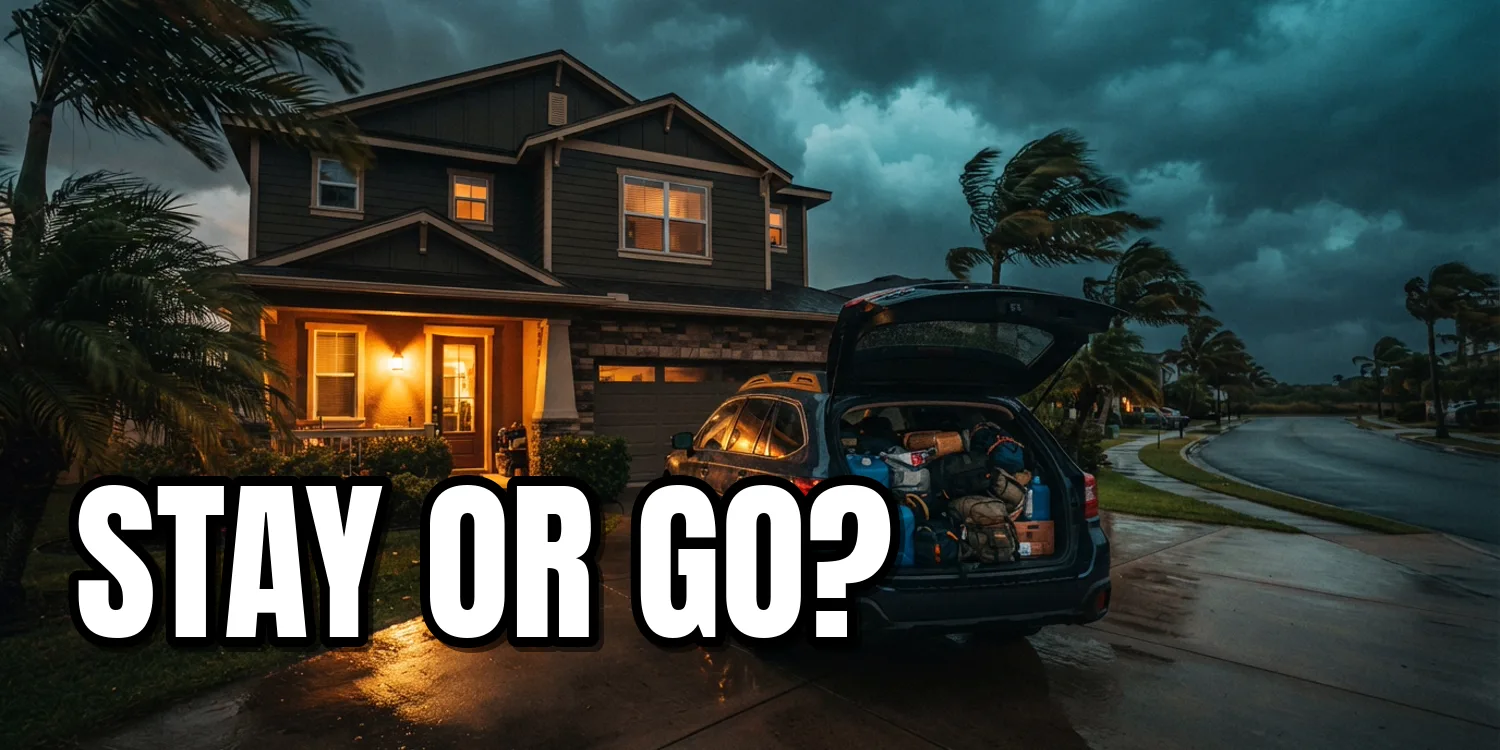
For most families, home is where the water, food, beds and medicine are. Leaving trades all of that for a car full of gear and a road full of other people with the same idea. That is why we treat leaving as the backup plan, and we spend as much time on the decision to go as on the gear.
There are clear reasons to go: a wildfire or flood heading your way, an official order, a chemical release, a house that can no longer be heated or defended. Ready.gov's evacuation page is the baseline for the official version (Ready.gov, evacuation), and our guide to deciding whether to bug in or bug out turns those reasons into triggers you can write down. This section covers the rest.
A small kit in the car or office to get you back to your door, a 72-hour pack per person, and the heavier INCH bag for people who expect not to come back. What goes in each, what to leave out, and how much a person of 60 can realistically carry.
Keeping the tank above half, storing fuel safely, and what an older vehicle can and cannot do after an EMP. We separate what is tested from what is forum folklore.
Paper maps, three routes out in three directions, and the choke points that jam first.
Where the family meets if phones are down, and the friend's farm or relative's house you have arranged ahead of time.
Decide your trigger now: the specific events that make your family leave. Write them into your family plan, put a get-home kit in each car, and buy paper maps of your county and the next two over. For staying put, go to grid-down living.