Bug-out and evacuation
Get-home bag checklist for your car
A get-home bag is a small pack that lives in your car or at work and carries you back to your own door when the roads, trains or phones stop working. It needs walking shoes, a liter or two of water with a way to treat more, light, a day of medicine, cash, a paper map and a warm layer, all in a pack light enough to wear for 20 miles.
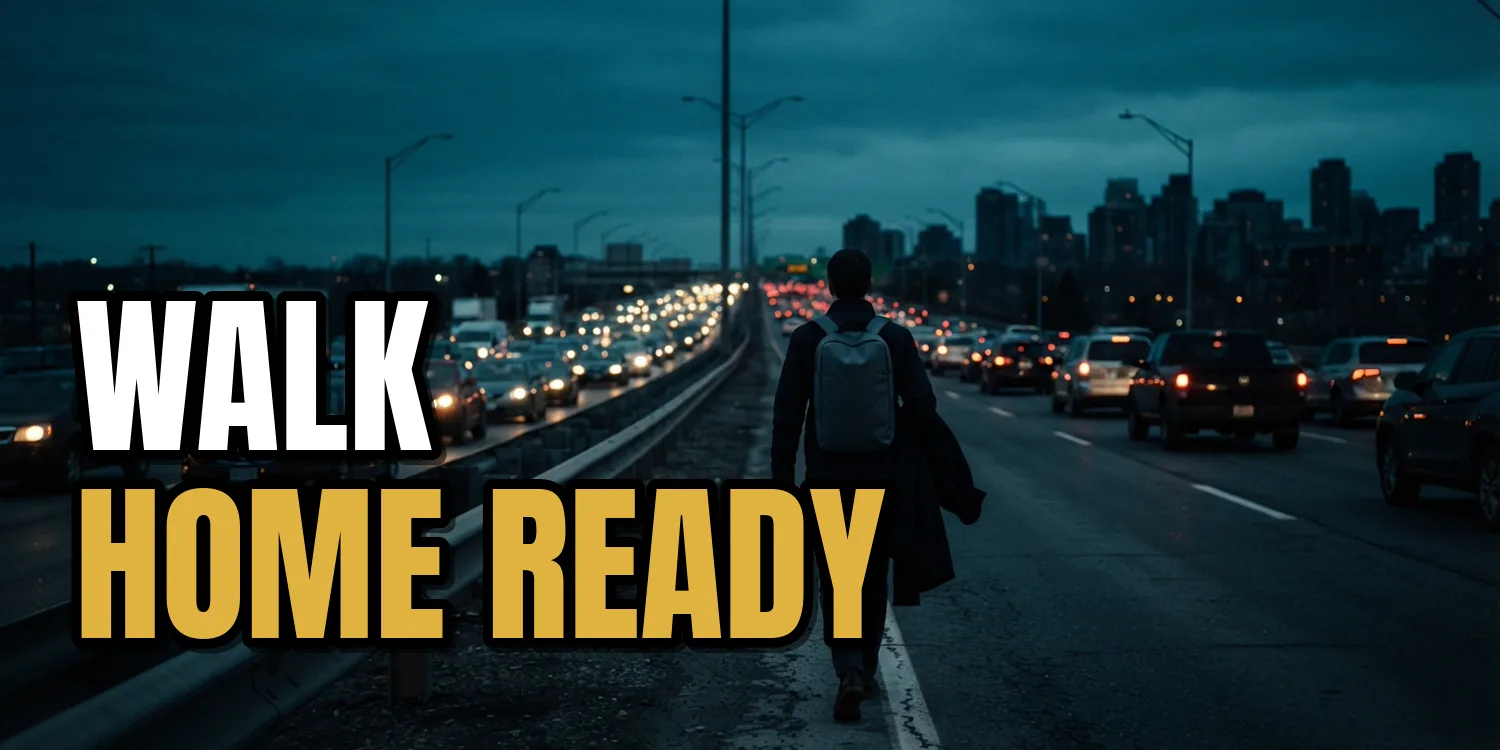
Most of the hours you are awake on a workday, your water, food, medicine and family are somewhere other than where you are standing. A grid failure at 4 p.m. does not wait for you to get home first. The get-home bag exists for that gap: the miles between the office, the job site or the store and the house where the rest of your preparations sit.
This checklist is built from Ready.gov's car kit, the way two well-documented commutes fell apart, and long-running prepper guides on get-home kits. Like every page on Dark Grid Prep, it is written from those public sources. We have not walked these routes for you, and your own route is the thing you will need to walk.
What a get-home bag does that a bug-out bag does not
The two bags point in opposite directions. TruePrepper describes the get-home bag as the reverse of a bug-out kit: instead of leaving home for a retreat, it is meant to get you back to your home and supplies (TruePrepper, get home bag list). That one difference changes what goes in it.
A bug-out bag has to keep you going for three days or more with no idea what waits at the other end. A get-home bag only has to last until you reach your own front door, which for most commuters means one long day and possibly one cold night. You can skip the cookware, the tent, the three days of food and most of the tools. In their place go the things a long walk on pavement actually uses up: feet, water, daylight and phone battery.
It also has to look ordinary. You will be carrying it through a parking garage, a train station or a crowd of other stranded people. A plain grey or black daypack draws less attention than one covered in straps and patches, and it fits under a desk without comment.
Why commuters get stranded first
Two events show how fast a normal commute stops working. On August 14, 2003, a cascade of plant shutdowns cut power to about 50 million people across the Northeast, Ohio, Michigan and Ontario. The outage stopped trains and elevators and disrupted cell service, and in New York it took more than two hours to evacuate passengers from stalled subway trains. That evening, thousands of people set out to walk home over the bridges, filling the streets and locking up traffic (History.com, 2003 blackout).
In January 2014, about two inches of snow and ice fell on metro Atlanta. Schools and offices released everyone at roughly the same hour, and the result was gridlock that kept motorists stranded in their cars for more than 18 hours, with children sleeping on buses and in school gyms. Cell towers struggled under the load, so families could not reach each other. Drivers left their cars on the interstates and walked, and a Home Depot opened its stores as shelter (Christian Science Monitor).
Neither was a collapse. One was a grid fault and the other was a light snowfall. Both turned a 30-minute commute into a night away from home, and both hit people who had nothing with them but a phone, a laptop bag and office shoes.
How far you would really walk
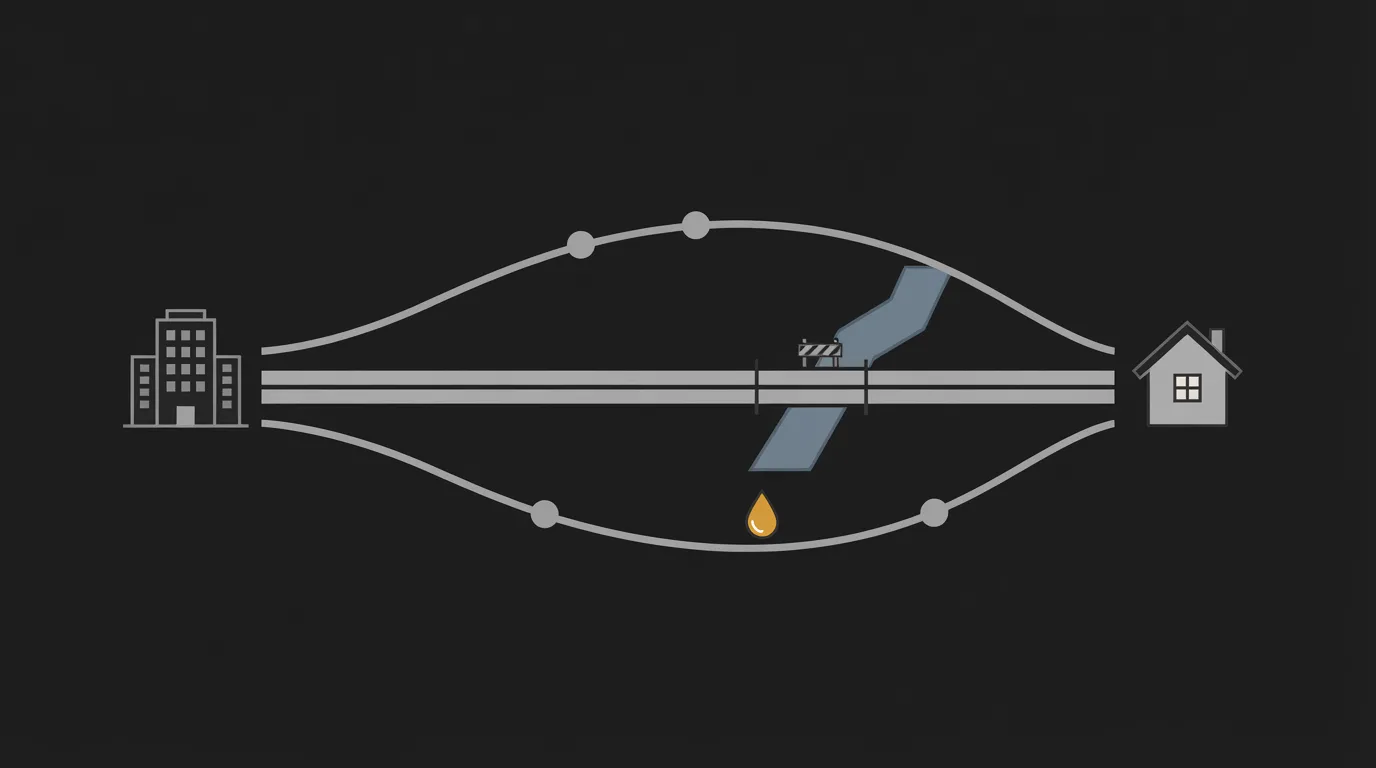
Before you pack, measure the problem. Open a map, plot the shortest walking route from work to home, and write down the mileage. Then plot it from the farthest place you regularly drive: a client site, the hospital where a parent gets treatment, the big-box store across the county.
A fit adult strolls at around three miles an hour on flat ground. Carrying a pack, in the wrong weather, through crowds and around closed bridges, I would plan on two. That turns a 12-mile commute into six hours on foot and a 25-mile commute into something you will not finish before dark. Distance decides the size of the bag. Under 10 miles, a small pack with water, a layer and light is enough. Past 20, plan for a night out and add the sleeping items in the shelter section below.
Rivers and highways matter more than raw miles. Bridges, tunnels and interstate overpasses are where a walking route gets funneled and where police close things first. Note every one between you and home, and find a second crossing for each.
The pack itself
TruePrepper suggests an 18 to 30 liter backpack, sized up if you have farther to go. That range matches the list below with room to spare. A pack with a padded hip belt carries the weight on your hips instead of your shoulders, which matters once the walk passes a few hours. If you would rather keep weight off your back entirely, the over-50 notes in our bug-out bag checklist cover carts and wheeled cases, and the same reasoning applies here.
Pack it, put it on, and walk two miles around your neighborhood in the shoes from the next section. If your shoulders or knees complain by the second mile, take weight out until they stop.
Shoes, socks and clothes for a long walk
The single item most people forget is a pair of shoes they can walk 15 miles in. Dress shoes, heels and work boots that pinch after an hour will end the walk long before thirst does. Keep broken-in walking shoes or light hikers in the trunk or tied to the pack.
- Two pairs of wool or synthetic socks, plus a small blister kit with moleskin or tape.
- Comfortable pants you can walk in, if you work in a skirt, a suit or a uniform.
- A rain jacket with a hood.
- A packable insulated layer, a warm hat and gloves from October to April.
- A brimmed cap and sunscreen for summer.
- A reflective vest or reflective band for walking road shoulders after dark.
Water and something to eat on the move
Water is the heaviest thing you will carry, at about 8.3 pounds a gallon, which is why get-home guides lean on purification rather than volume. Carry one or two liters in bottles you can refill, plus purification tablets or a small squeeze filter. A gas station restroom tap, a park fountain or a drinking-water spigot will do for refills, and the tablets cover anything you are less sure of. In a wide outage, city water pressure can fail too, as the 2003 blackout showed when electric pumps stopped in many areas. Our emergency water guide explains why and how to treat doubtful water.
Food only has to fuel walking, so pick dense, no-cook snacks you eat while moving: protein bars, nuts, jerky, nut butter packets, dried fruit. A day's worth weighs little. Choose foods you already like, because a long walk on an upset stomach is miserable.
Light, phone power, radio and a paper map
Night comes early in winter, and a grid failure takes the streetlights with it. A headlamp keeps both hands free for railings, fences and a phone, and a small flashlight is the backup. Spare batteries for both go in a zip-top bag.
Your phone is your map, your news and your way to reach family, and it will drain fast searching for a jammed network. Carry a charged power bank and the cable, and keep a charger plugged into the car. Turn on low-power mode as soon as the outage starts.
When the network does fail, a paper map of your county still works. Mark your main route and the two alternates on it with a pen, along with places to stop: a friend's house, a fire station, a church, a 24-hour store. A small battery or hand-crank radio gives you road closures and official updates when your phone has nothing. Ready.gov lists both the map and the car charger as car-kit basics (Ready.gov, car safety).
Before you need any of it, settle how your household will reach each other with phones down. Our family communication plan sets a text-first message and a meeting rule so everyone is not walking toward an empty house.
Medicine and a small first aid kit
If you take a daily prescription, put at least one day of it in the bag, and two if your route is long. A missed evening dose of blood pressure medicine or insulin is a bigger threat on a stranded night than anything the weather does. Keep a printed list of what you take, the doses and your doctor's number. Our medication reserve guide covers how to keep a rotating supply legally and how long insulin keeps outside the fridge.
- Bandages, gauze, tape and antiseptic wipes.
- Pain relief for feet and joints.
- Spare glasses or contacts.
- Hand sanitizer, a small pack of tissues and a few N95 masks for dust, smoke or a packed shelter.
Cash, ID and keys
Card readers and ATMs go down with the power, and a store running on a generator may sell you water only if you can pay in cash. Keep small bills in the bag, enough for food, a cab or a ride if one appears, and a night's shelter. Our article on how much emergency cash to keep works through the amount for the house. A few days of spending money is the slice that belongs here.
Add a copy of your driver's license, which may get you past a checkpoint into your own neighborhood, and a spare house key. If the person who usually lets you in is stranded too, the key matters more than most of the gear.
What stays in the car
The pack is what you carry if you leave the car. Everything else rides in the trunk, where weight does not matter, and covers the hours you spend waiting for traffic to move. Ready.gov asks drivers to keep a basic emergency kit in the car with jumper cables, flares or a reflective triangle, an ice scraper, a car phone charger, a blanket, a map, and cat litter or sand for traction. Its winter page adds a flashlight, warm clothes, bottled water and snacks (Ready.gov, winter weather).
To that I would add a gallon of water, a heavier wool blanket, a small shovel in snow country, a roll of paper towels and a bucket with a lid and trash bags. Anyone stuck in an 18-hour jam with children in the back seat will see why the last one is on the list.
Ready.gov also asks you to keep the tank full in case of evacuation or a power outage, since gas pumps run on electricity. My own rule is to refill at half a tank. It costs nothing and doubles the distance you can drive before you need the pack at all.
Stay with the car or start walking
The bag gives you the option to walk. It does not make walking the right call. Ready.gov is plain about winter storms: stay off the roads, and if you are trapped in your car, stay inside. A car is shelter from wind, and it is where rescuers look. Atlanta's stranded drivers were reached by state police and the National Guard.
Walking makes more sense when the weather is mild, it is daylight, the route is one you know, and home is close enough to reach before dark. It also makes sense when the car itself is the problem: no fuel left, a road that will not reopen, or water rising around the wheels. Ready.gov warns that six inches of moving water can make a car lose control and a foot of it can float many vehicles.
If you do leave the car, move it off the travel lanes if you can, leave a note on the dash with your name, phone number, route and the time you left, and take the pack, the map and the water. Text your household your route and the time you left before you set off.
Keep the bag current
A bag that sat in a hot trunk for two summers will betray you in small ways: melted bars, a dead power bank, a dried-out lighter, last year's prescription, a jacket for a different season. Go through it twice a year. The clock changes in March and November are easy dates to remember and line up with the season you are packing for.
On each pass, swap the medicine and food, charge the power bank and radio, refill the water, change out the clothing for the season, and recheck your route for new construction or closed bridges. Then walk two miles with it on your back again.
Where I would start
If you are building one this weekend, I'd begin with three things that cost almost nothing: the walking shoes you already own, moved into the trunk; a paper county map with your routes marked; and a day of your prescriptions in a labeled bottle. Those cover the failures that strand people most, which are sore feet, a dead phone with no other way to navigate, and a missed dose.
Then add the pack, two liters of water, tablets, a headlamp, a power bank, a warm layer, small bills and a key. That is a complete get-home bag for most commutes under 20 miles, and it fits in a daypack under 15 pounds. Write where it lives into your household plan, so whoever gets home first knows you are walking and which way you are coming.
Frequently asked questions
What is the difference between a get-home bag and a bug-out bag?
Should the bag live in the car or at the office?
How much water should I pack?
Is it safer to stay with a stuck car or to start walking?
How often should I repack it?

Written by
Walt Brenner
Grid-down threats, home security and family plans
Walt Brenner is the pen name of the writer who covers grid-down threats, home security and family emergency plans for Dark Grid Prep. He draws on FEMA and Ready.gov guidance, utility and government reports, manufacturer manuals and long-running prepper forums, and he says plainly where those sources disagree. His beat is the household: what a family of four in a suburb or on a rural lot should have, know and do before the lights go out.
Last checked 2026-11-11
Comments
No comments yet. Questions and your own experience are welcome.
Thank you. Your comment will appear once it has been reviewed.