Grid-down living
Safe heat in a blackout
Four types of heaters can warm a room with the grid down: an electric heater fed by a generator outside, an indoor-rated propane heater, a listed kerosene heater burning K-1, and a wood stove installed to code. Grills, camp stoves, the kitchen oven, outdoor propane heaters and a running car belong outside, every time.
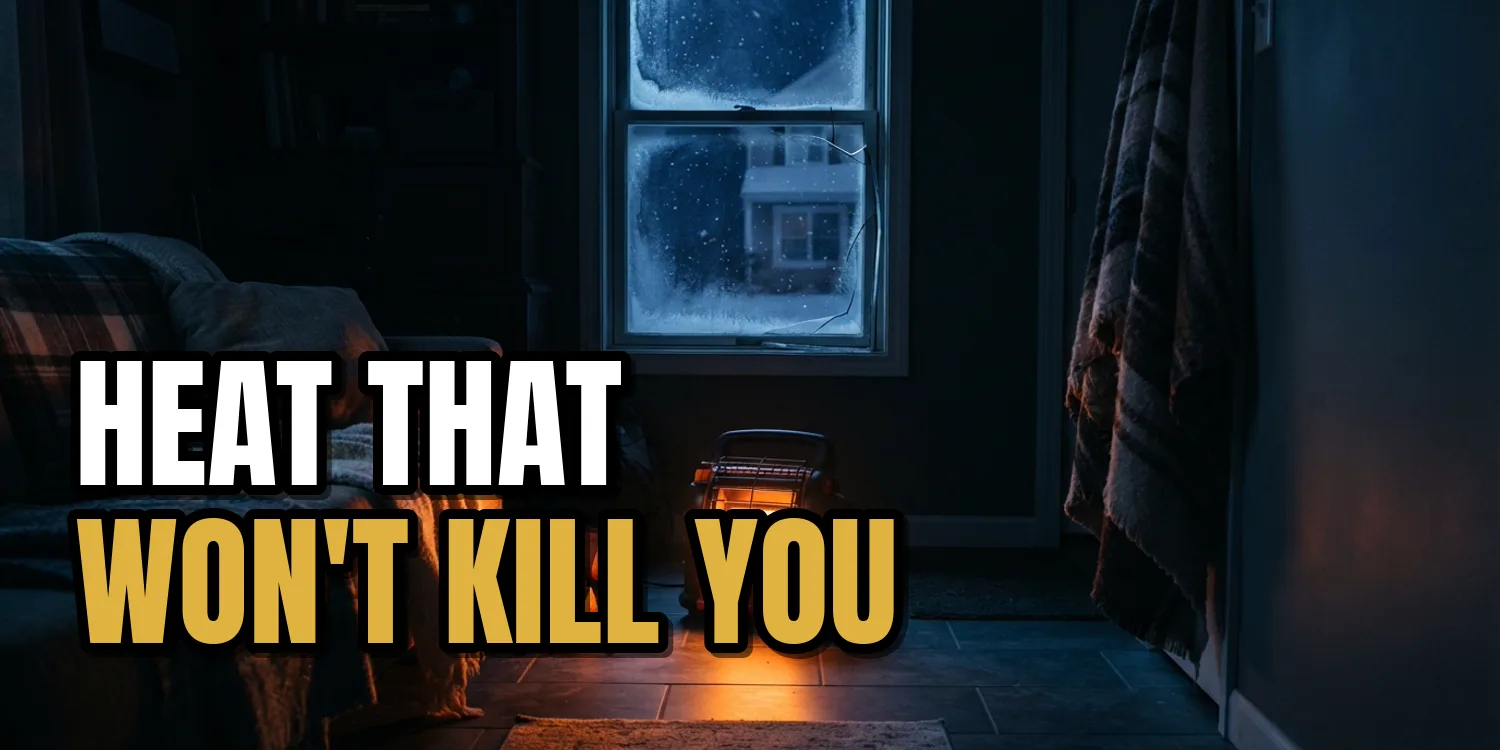
The furnace went quiet with the power, the thermostat reads 52, and the forecast says the lines will not be fixed before the weekend. You want heat tonight, and you want to wake up tomorrow. This page sorts the heaters people reach for in a blackout into the ones you can run indoors with the right precautions and the ones that send families to the emergency room, then tells you how to set up the room so even the safe ones stay safe.
Set up your warm room with the outage guide
The heat sources that kill
Almost every blackout poisoning starts with something that was built for outdoor use and got carried inside because people were cold. Ready.gov is blunt about the list: generators, camp stoves and charcoal grills run only outdoors, and a gas stove or oven is never used to heat a home (Ready.gov, power outages). Keep these out of the plan entirely:
- Charcoal or gas grills. Coals carried inside to warm an apartment keep giving off fumes long after the flames die.
- Camp stoves. They are cooking equipment, with no oxygen sensor and no tip-over cutoff.
- The kitchen range left on. Cooking dinner on it is ordinary. Leaving the burners or the open oven running for warmth is what the federal guidance forbids.
- Outdoor propane heaters. Tank-top heaters, patio heaters and the forced-air "torpedo" units sold for job sites. The company behind the Buddy heaters makes several of them, files its forced-air, garage, shop and utility lines under commercial use, and says those need one square inch of ventilation for every 1,000 BTU (the maker's product FAQ). A living room with the doors shut has nothing like that.
- A car idling in the garage. Open garage door or not, the exhaust drifts into the house through the connecting door.
- A generator anywhere near the house. It goes outside, at least 20 feet from doors and windows.
All of these produce carbon monoxide, which you cannot see or smell. Our carbon monoxide guide for blackouts covers the symptoms, alarm placement and the first minute after an alarm sounds, so this page stays on the heaters themselves.
Electric heat from a generator
An electric space heater makes no fumes at all, which puts all the combustion risk on the generator in the yard. Placed correctly, that is the cleanest heat in a dark house. The catch is load: a typical plug-in space heater draws about 1,500 watts on its high setting, so it can take most of a small generator's output by itself. Add up the heater, the refrigerator and whatever else is plugged in, and keep the total under what the generator is rated to run continuously.
Most fires with these heaters come from the cord. The Maine Emergency Management Agency's alternative heat page gives the rules that matter (Maine EMA, alternative heat source safety):
- Run the heater on the floor, never on a table or chair where it can fall.
- Keep rugs and carpet off the cord, since a covered cord overheats.
- Skip the extension cord if you can. If the generator setup forces one, use a heavy-duty cord marked 14 or 12 AWG, the kind sold for air conditioners.
- Unplug the heater if the plug feels hot, and stop using it if a GFCI outlet trips.
- Keep it away from bathrooms and damp spots, and never use it to dry laundry or thaw a pipe.
The same page says to watch the heater the whole time it runs, even one with automatic shutoffs. Pick a model with a tip-over switch, and let the heater warm one closed-off room rather than the whole floor.
The objection is fuel. A generator running a heater burns gasoline steadily, and gasoline stations need power too. Electric heat buys comfort in short sessions, say an hour before bed and an hour in the morning, and the blankets do the rest.
Indoor-rated propane heaters
Some propane heaters are certified for use inside a home, and the label matters more than the brand. The company that makes the Buddy heaters splits its own range in two: residential indoor-safe heaters, which for that company means the Buddy family and its vent-free wall heaters, and commercial heaters that need a garage or job site with people going in and out. Even a residential model comes with a manual that may ask for extra ventilation, and the maker tells buyers to read it first.
Where you live can rule them out. The same page says Massachusetts and Canada do not allow propane heaters indoors, California allows the Buddy series in places like a garage or tent but not in dwellings and bans vent-free heaters outright, and most cities forbid gas heaters in apartments and high-rise buildings. Look up your local rule before you buy, because an apartment dweller may be limited to electric heat and a warming center.
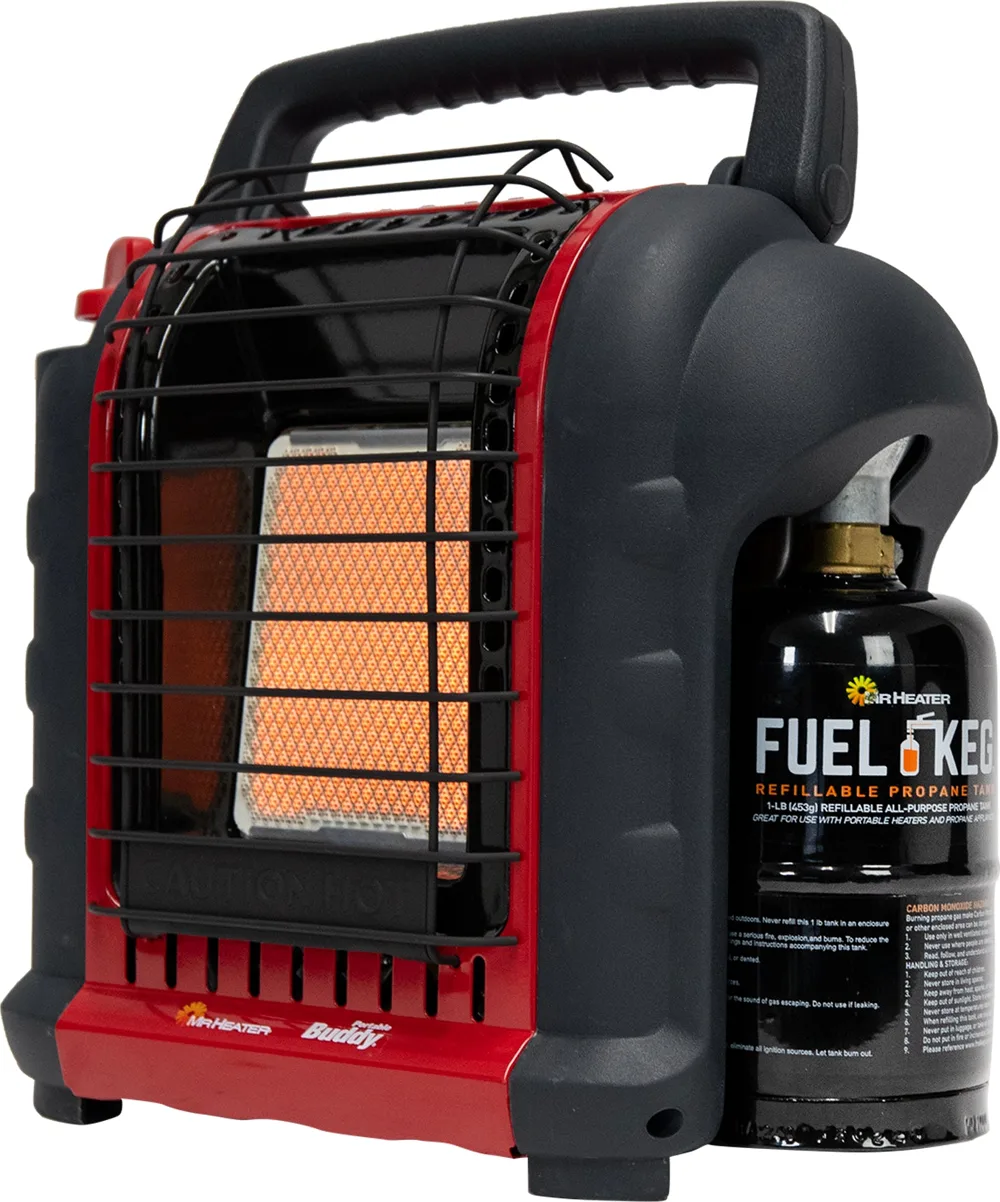
Mr. Heater
Portable Buddy heater (MH9BX)
- Heat output
- 4,000 or 9,000 BTU
- Heats up to
- 225 sq ft
- Run time, 1 lb cylinder
- 3 hours high, 6 hours low
- Safety
- Oxygen depletion sensor, tip-over shutoff
- Not sold in
- Massachusetts, Canada
- Price (Nov 9, 2026)
- $155.14
For a household that wants flame heat in one small room and will keep a battery CO alarm beside it.
The Buddy is the heater most preppers mean when they say "indoor propane", and the maker's product page lists an oxygen depletion sensor and an accidental tip-over shutoff. Its weak point for a long outage is fuel: a one-pound cylinder lasts one evening, so a household planning on days of use buys the maker's hose and filter and runs it from a 20-pound tank kept on hand. The maker's FAQ says the Buddy needs that fuel filter on most hoses, replaced each season, because oils from the hose can clog the heater.
Do not mistake the oxygen depletion sensor for a carbon monoxide alarm. An ODS closes the gas valve when oxygen in the room drops from the normal 21 percent to about 18.5 percent. CO2Meter, which sells both kinds of sensor, points out that for oxygen to fall that far something else has to replace it, and carbon monoxide can reach dangerous levels along the way (CO2Meter, ODS vs CO detector). Their advice is the same as every fire service's: keep a CO detector near any gas heater, ODS or no ODS.
Kerosene heaters and K-1 fuel
Kerosene heaters put out a lot of heat for their size and the fuel stores well, which is why older preppers keep one in the shed. They also vent straight into the room. The New York State Department of Health warns that portable kerosene heaters release their combustion products directly into the home (NYS Department of Health, kerosene heaters), so every rule here aims to cut those fumes down and give them fresh air to mix with.
Maine's emergency agency lists what to look for in the heater itself: a UL listing, an automatic switch that shuts it off if it tips over, an automatic starter so nobody uses matches, a fuel gauge to stop overfilling, and a safety grille that keeps hands off the hot burner. Running one means three habits:
- Burn only crystal-clear 1-K kerosene. The Consumer Product Safety Commission has warned that clear color alone does not prove the grade, since lower grades can look the same, so buy from a pump or can labeled 1-K (CPSC publication 463, archived).
- Store the fuel outside the living space. Maine says five gallons is enough, in a clearly marked metal container in a garage or shed.
- Open a window slightly every time the heater burns, and refuel outdoors with the heater cold.
The objection is smell and soot, and a heater burning the wrong fuel produces more of both. If you cannot get labeled 1-K kerosene before the season, choose a different heat source instead of improvising.
Wood stoves and fireplaces
A wood stove that was installed to code and vented through a sound chimney is the one fuel heater built to run all day in a house. It needs no electricity, and its smoke leaves through the flue. The risks shift to fire and to a blocked or cracked chimney. Maine's checklist covers it:
- an approved floor protector under the stove
- seasoned hardwood only, never trash, cardboard boxes or a Christmas tree
- a professional chimney inspection every year, plus a look at the pipe for creosote during the season
- three feet of clearance from people, pets, kindling, bedding and clothing
- the flue open before any fire in a fireplace, and a sturdy screen in front
- ashes carried out in a metal container
The time to fix a stove is before the storm. A heavy snowfall can block a chimney cap or an exterior vent, so clear those as part of the morning routine during a long outage.
Set up one room first
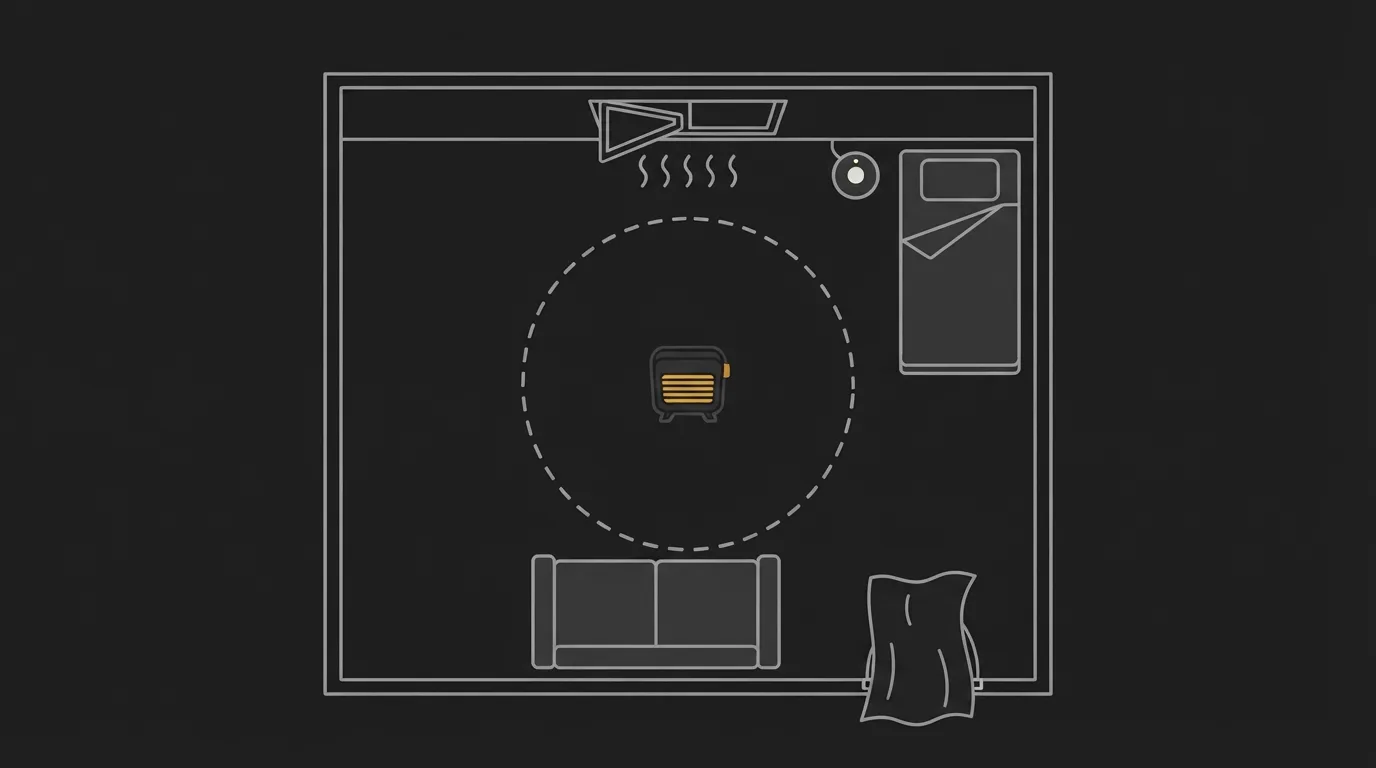
Whatever you burn, the setup decides how much fuel you need and how much air you are sharing with it. Choose one interior room, the smaller the better, hang blankets across the doorways, and move the family into it with sleeping bags and layers. A heater warming 200 square feet works far less hard than one fighting a whole open floor plan.
Then put the safety gear in that room before the heater comes in:
- a battery carbon monoxide alarm, tested after you flip off the breaker so you know the battery works
- a working smoke alarm on the same level
- three feet of bare floor around the heater, with the sofa, curtains and bedding outside that ring
- a window cracked an inch or two for any flame heater
- a fire extinguisher by the door
Run a fuel heater only while someone is awake to watch it, then switch it off and let the insulation and the bodies in the room carry the heat until morning. If the room still falls below what the oldest or youngest person can tolerate, go to a warming center. Ready.gov points people to community locations with power, and local officials announce them on the radio.
What I would buy and what I would skip
For a typical suburban house with no wood stove, I'd start with two battery carbon monoxide alarms and a cheap electric heater with a tip-over switch, because they work with a generator the family may already own and add no new fumes. I'd add an indoor-rated propane heater with an ODS only if local rules allow it, the house has a room that can be closed off, and someone will stay awake while it burns. I'd skip any heater whose box shows a job site or a patio, and I'd never improvise with the grill, the oven or a flower-pot candle rig seen online.
If the house already has a wood stove, the money goes into a chimney inspection and a winter's worth of seasoned hardwood before anything else. That one appointment does more for your grid-down heat than any gadget.
Frequently asked questions
Can I sleep with a propane heater running?
Does the oxygen sensor on my heater warn me about carbon monoxide?
Is a construction or garage heater fine for the living room?
How much kerosene should I keep?

Written by
Walt Brenner
Grid-down threats, home security and family plans
Walt Brenner is the pen name of the writer who covers grid-down threats, home security and family emergency plans for Dark Grid Prep. He writes from FEMA and Ready.gov guidance, utility and government reports, manufacturer manuals and long-running prepper forums, and he says plainly where those sources disagree. His beat is the household: what a family of four in a suburb or on a rural lot should have, know and do before the lights go out.
Last checked 2026-11-09
Comments
No comments yet. Questions and your own experience are welcome.
Thank you. Your comment will appear once it has been reviewed.