Grid-down living
Surviving a long power outage at home
Stay home, protect your water first, keep one room warm or cool, and never let a generator or heater poison the house. The rest is food, light and patience, handled in the right order.
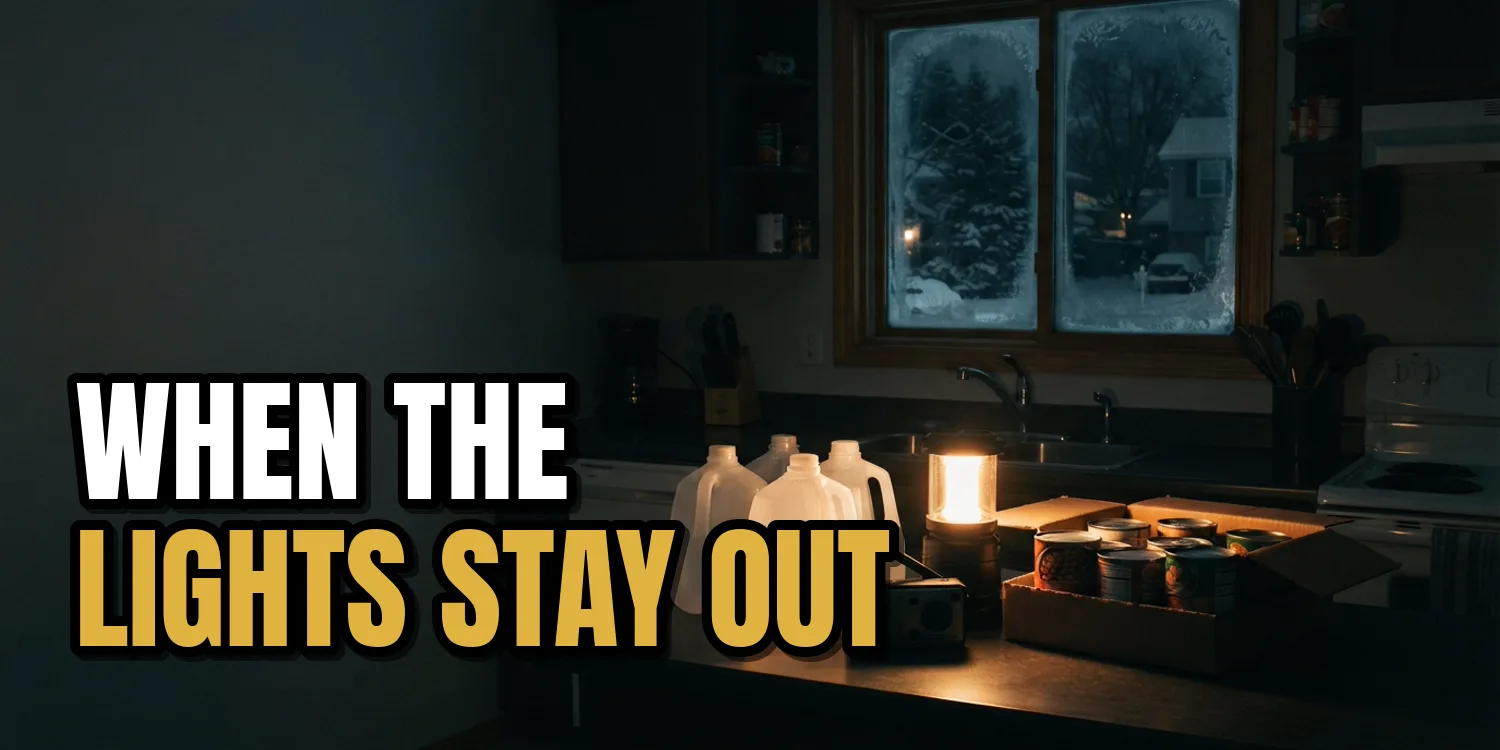
A storm, a heat wave, a wildfire shutoff, a failure at a substation or something rarer and larger all end the same way inside your house: the lights go out and do not come back on schedule. Ready.gov warns that an extended outage can cut communications, water and transportation, close stores, gas stations, ATMs and banks, spoil food and contaminate water, and stop medical devices (Ready.gov, power outages). That is the whole problem in one list.
This guide is written for a family that plans to ride it out at home, which is the right call for most households (our guide to deciding whether to bug in or bug out covers the exceptions). It goes in the order things fail, so you spend your first hours on what matters in the first hours.
The first hour
Find out what you are dealing with. Look outside. If the whole street is dark, it is not your breaker. Turn on a battery or crank radio and listen for the utility and local emergency management. If cell service still works, check your utility's outage map once and then save the battery.
Then do four things before you do anything else:
- Hand out light. One flashlight or headlamp per person, as Ready.gov recommends. Put the candles away. They start house fires, and a dark house full of people moving around is where they get knocked over.
- Unplug the electronics. Power can come back with surges and spikes that damage appliances, so leave one lamp switched on to tell you when it returns.
- Close the fridge and freezer, and tape a note on them. Every time a door opens, warm air rushes in.
- Catch water while it still runs. If you are on city water, fill the bathtub and every clean pot. Pumping stations need power too, and pressure can drop. On a private well, the pump stopped when the power did, so the water you stored is all you have.
Last, test the carbon monoxide detectors. If they are hard-wired without a battery backup, they just went dark, and the next 48 hours are when families start running generators and heaters. Our page on carbon monoxide safety in a blackout covers where each of those may run and what to do if an alarm sounds.
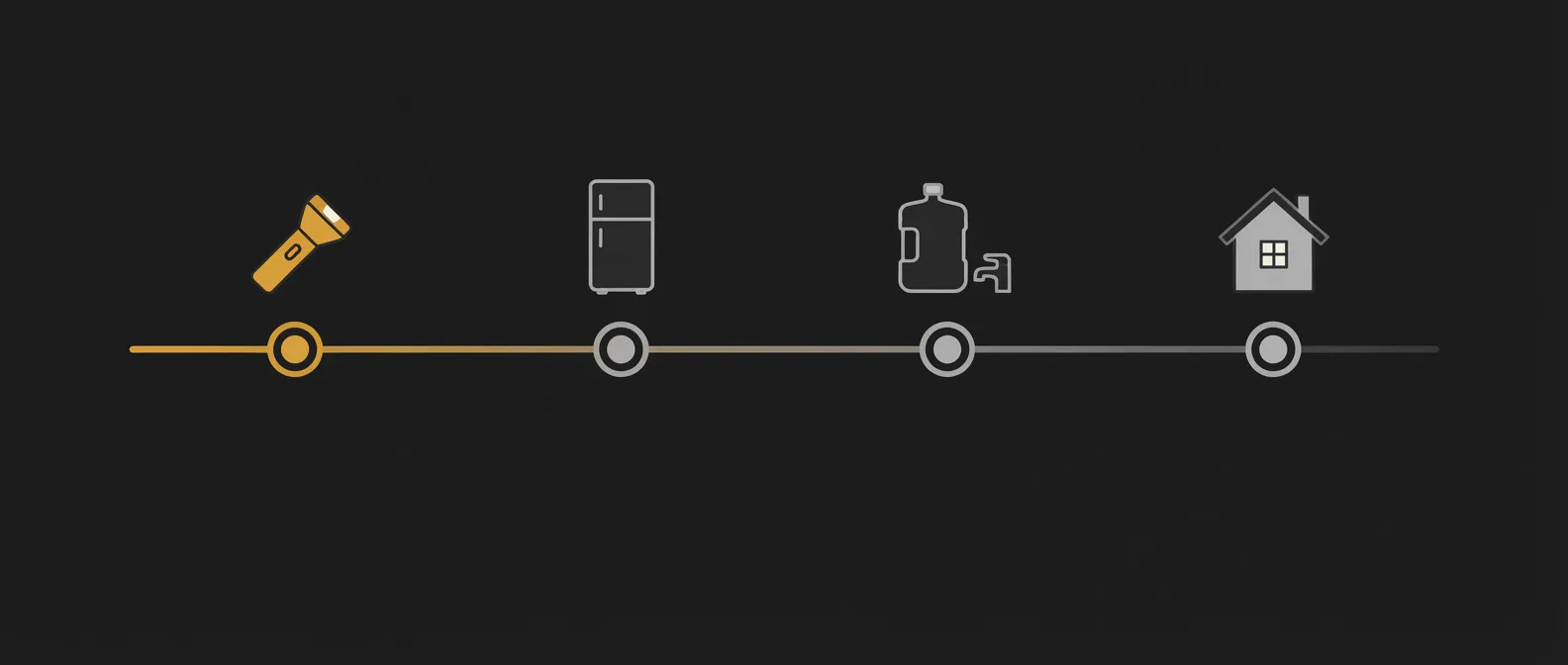
The first day: food, light and phones
Ready.gov gives two numbers worth memorizing. A closed refrigerator keeps food cold for about four hours. A full freezer holds its temperature for about 48 hours. After that, food that has been at 40°F or above for two hours goes in the trash. A cheap appliance thermometer in each one removes the guessing.
So the first day's meals come out of the refrigerator: milk, leftovers, meat and soft cheese, in roughly that order. The freezer stays shut. If the outage looks long and it is below freezing outside, a cooler on a shaded porch becomes a second refrigerator, as long as animals cannot reach it.
Cooking happens outdoors on a grill or camp stove, or indoors only on equipment the manufacturer rates for indoor use, with ventilation. Ready.gov is blunt that camp stoves and charcoal grills belong outside, at least 20 feet from windows, and that a gas oven or stovetop is never a heater.
Phones become your most valuable battery. Put every phone on low-power mode, close the apps, and charge from a power bank or the car with the car parked outside, never idling in an attached garage. Families who came through the February 2021 Texas freeze have written that card readers were down everywhere and cash was the only thing that worked at the few stores still open (one account from that week). Small bills belong in the kit for that reason.
Days two to seven: water, heat and sanitation
Water
Ready.gov's figure is one gallon per person per day, for drinking and sanitation, and its water page adds that hot weather can double what a body needs (Ready.gov, water). A family of four needs 28 gallons for a week before a single toilet is flushed by bucket. Drink the water you know is safe first, and do not ration drinking water. Ready.gov says to drink what you need today and look for more tomorrow.
When stored water runs low, treat anything of uncertain quality. Boiling at a rolling boil for one full minute is the safest method Ready.gov lists. Without fuel to spare, plain unscented household bleach of 5.25 to 6 percent sodium hypochlorite works: 1/8 teaspoon per gallon, stir, wait 30 minutes, and you should smell a faint chlorine odor. Strain cloudy water through a coffee filter or clean cloth first.
Heat or cooling
Do not try to heat or cool the whole house. Pick one room, ideally an interior room with few windows on the warm side of the house in winter or the shaded side in summer, and move the family into it. Hang blankets over doorways, close off the rest of the house, and put everyone to sleep in that room. Body heat from four people in one closed bedroom counts for a lot.
In winter, dress in layers, wear hats indoors, and eat and drink warm food because it helps. Any fuel-burning heater used indoors must be rated for it, kept clear of anything that burns, and paired with a working CO detector in the same room. Our guide to safe indoor heaters for a power outage sorts the ones that qualify from the ones that do not. In summer heat, Ready.gov's advice is to go to a community location with power when the heat becomes extreme, and older adults should take that advice seriously sooner than they want to.
Sanitation
Toilets still flush if you pour a bucket of water into the bowl, which is what the bathtub water is for. If water is short, line the toilet or a five-gallon bucket with a heavy trash bag, add a scoop of kitty litter or sawdust after each use, tie it off and store the bags outside in a lidded can. Hand washing before every meal matters more in week one than any piece of gear, because sickness in a house without running water spreads fast.
Week two and beyond
If the power is still out after a week, the event has turned into something larger than a storm, and the priorities shift from comfort to endurance. The outages federal agencies expect to last months are the ones that destroy large grid transformers, which a severe solar storm or a nuclear EMP could do across a region. Our guide to what an EMP and a solar storm would each do to your house explains which of the two can also take out your electronics.
Fuel becomes the clock. Count what you have in gallons of gasoline, pounds of propane and sets of batteries, and plan backward from it. Run a generator in blocks of a few hours to pull the freezer back down and charge batteries, rather than all night.
Your house becomes visible. On a dark street, a lit window, a running generator and the smell of cooking all tell people who is prepared. Blackout curtains on the lit room, a quiet generator location and a little discretion about what you have are part of staying safe. Our home defense section covers this in depth.
Neighbors matter. Check on the older couple down the street. A block that shares information, watches each other's houses and pools a generator for a medical need is safer than any one household alone.
Routine holds people together. Set meal times, a radio check at the same hour each day, chores for the kids and a bedtime. A family that keeps a schedule makes fewer mistakes when it is tired and cold.
The mistakes that hurt people
Most outage deaths are not caused by the outage. They come from what people do to cope with it.
- Running a generator too close to the house. Ready.gov's rule is outdoors and at least 20 feet from windows, doors and attached garages. Carbon monoxide has no smell, and a garage with the door open is still part of the house.
- Backfeeding the house through an outlet. A "suicide cord" plugged into a wall socket can push power back onto the utility line, where it can injure line workers and start fires. Use heavy-duty extension cords to individual appliances, or have an electrician install a transfer switch.
- Heating with the oven or a charcoal grill. Both are on Ready.gov's list of things never to do indoors.
- Refueling a hot generator. Let it cool first. Fuel on a hot engine ignites.
- Forgetting refrigerated medicine. Ready.gov advises discarding medicine that should be refrigerated once the power has been out more than a day, unless the label says otherwise, and asking a doctor or pharmacist for a new supply. Plan this one before the outage, with your pharmacist. Our medical section has more on it.
What to have before it happens
None of the steps above work with an empty closet. The short list, in the order I would build it:
- Water: at least a gallon per person per day for two weeks, in sealed bottles or food-grade containers. See stockpiling for containers and rotation.
- A carbon monoxide detector with battery backup on every level of the house.
- A flashlight or headlamp per person, spare batteries, and a battery or hand-crank radio with NOAA weather alerts.
- Two weeks of food your family already eats that needs no refrigeration, and a manual can opener.
- A way to cook outdoors and fuel for it.
- A plan for prescriptions and any power-dependent medical device, made with your doctor.
- Cash in small bills, a full gas tank, and a written family plan that says who does what.
- Then, if the budget allows, a generator or battery power station sized for the freezer, a few lights and the phones.
What I would do first
If I had one evening and a hundred dollars, I would buy CO detectors with battery backup and a case of water before I looked at a single generator. The generator is what people want to talk about, and it is also what kills families every winter when it runs in the wrong place. Water and a working detector handle the two things that hurt people first.
Then I would turn the main breaker off for one Saturday, from breakfast to bedtime, and see what breaks. Every household that tries it finds something: the well, the garage door, the medical device nobody thought about, the kid who has never been in a fully dark house. That one day will teach you more about your own plan than any list on this site, including this one.
Frequently asked questions
How long can a family stay home without power?
Should I fill the bathtub when the power goes out?
Can I plug my generator into a wall outlet?
What should I buy first for a long outage?

Written by
Walt Brenner
Grid-down threats, home security and family plans
Walt Brenner is the pen name of the writer who covers grid-down threats, home security and family emergency plans for Dark Grid Prep. He writes from FEMA and Ready.gov guidance, utility and government reports, manufacturer manuals and long-running prepper forums, and he says plainly where those sources disagree. His beat is the household: what a family of four in a suburb or on a rural lot should have, know and do before the lights go out.
Last checked 2026-11-08
Comments
No comments yet. Questions and your own experience are welcome.
Thank you. Your comment will appear once it has been reviewed.