Bug-out
Bug-out bag builder: what goes in, what it weighs
A bug-out bag holds three days of the basics: water and a way to treat more, food you can eat cold, rain and warm layers, light, first aid with a week of medicines, document copies and cash, a radio, a map and a few tools. Loaded, it should weigh no more than about a fifth of your body weight, less for children and older adults. Tick your items below and the builder adds up the weight.
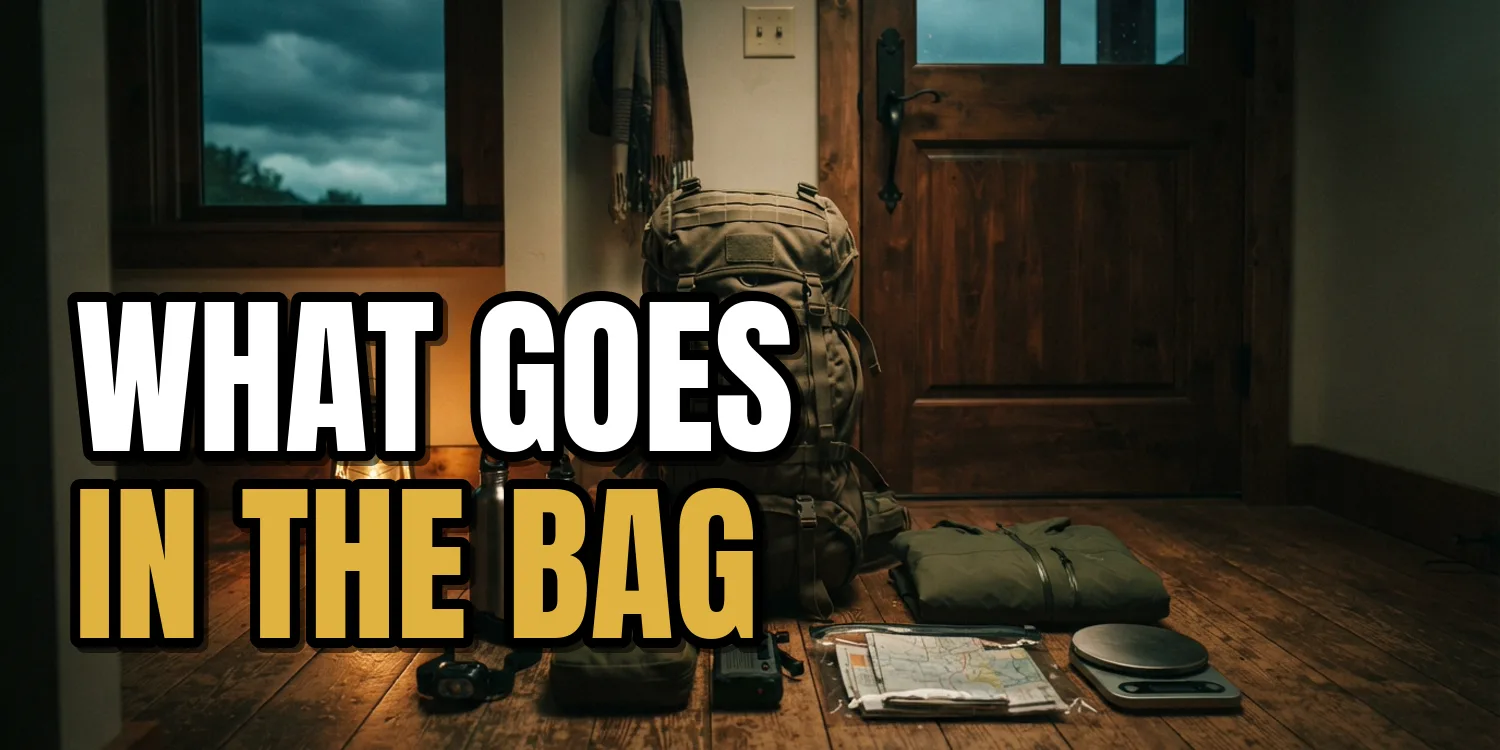
Most bug-out bag lists online run to a hundred items, and a bag built from one of them ends up too heavy to walk with. The list that holds up is the official one from Ready.gov and the American Red Cross, sized to three days, with a weight limit on top. Build one bag at a time: say who carries it, tick what goes in, and the builder tells you the loaded weight and how it compares with what that person can carry. When it looks right, print the list and pack from it.
Build your bag and weigh it
Item weights are typical figures for common versions of each item, so your own gear will come in a little over or under. Weigh the packed bag on a bathroom scale once and trust that number over this one. The weight limits are the guidelines explained further down, and they are a ceiling for planning, not a fitness test.
The bug-out bag essentials list, category by category
Ready.gov's basic kit and the Red Cross survival kit list nearly the same things, and both are written for a family that may have to leave home with what it can carry (Ready.gov, build a kit, and American Red Cross, survival kit supplies). The Red Cross sets the evacuation kit at three days of food and water and a seven-day supply of medications. Everything below comes from those two lists, sorted into the groups the builder uses, with what changes when the kit goes on someone's back instead of sitting in a closet.
Water and a way to make more
Both agencies ask for one gallon per person per day. That is the right amount for a house, and the wrong amount to carry: three gallons weigh 25 pounds before anything else goes in. A pack carries two or three liters and the means to refill them, which is why the filter, the tablets and a metal container for boiling sit at the top of the list. The full gallon a day stays in the car or at the destination. Our page on storing two weeks of water at home gives the bleach dose if the tablets run out.
Food you can eat without a kitchen
Ready.gov asks for non-perishable food, and the Red Cross adds "easy-to-prepare." In a pack that means food that needs no cooking and no can of water to rehydrate it. The food section below goes through what to pack.
Rain, warmth and a change of clothes
Ready.gov lists a complete change of clothing suited to the climate, sturdy shoes, and a sleeping bag or warm blanket for each person. The Red Cross adds an emergency blanket, rain gear, a hat and work gloves. A rain jacket and one warm layer do more than any other two items to keep someone functional after a cold night in a car or on a gym floor, and dry socks are the cheapest comfort you can carry. A sleeping bag is the single heaviest optional item in the builder, worth its two and a half pounds in winter or when you have no indoor destination.
Light and power
A flashlight and extra batteries are on both lists, and Ready.gov adds a phone with chargers and a backup battery. A headlamp leaves both hands free for a gate latch, a child or a map, so I'd make it the main light. Charge the power bank on the same day you rotate the bag.
First aid, medicines and hygiene
The Red Cross asks for a first aid kit, seven days of medications and medical items such as glasses, hearing aid batteries and syringes. Ready.gov notes that about half of Americans take a prescription medicine every day, and that refills get hard to find after a disaster. Moist towelettes, garbage bags, soap and sanitizer cover sanitation, and a dust mask or N95 covers smoke and ash. If anyone in the house uses insulin, our guide to storing insulin without power covers the temperature limits.
Documents and cash
The Red Cross list is specific: a medication list and medical information, proof of address, the deed or lease, passports, birth certificates and insurance policies. Copies in a zip bag weigh a few ounces and save weeks of work at a shelter desk or an insurance office. Small bills cover gas, food or a motel when card readers are down. The INCH bag explainer goes further on the document pouch for a family that may not return.
Communication and navigation
A battery or hand-crank radio with the NOAA weather band, a whistle, local maps and written contact information appear on both lists. Paper maps matter because phone maps depend on a signal and a charge. Mark two routes out and a meeting place on them before you need them, the way our family emergency plan guide lays out.
Tools and fire
The Red Cross lists a multi-purpose tool, matches, duct tape and scissors, and Ready.gov adds plastic sheeting and a wrench or pliers for turning off utilities. A multi-tool covers the pliers, the scissors and the can opener. A lighter and matches in a waterproof bag, a flat-wrapped length of duct tape and two contractor bags (rain cover, ground sheet, poncho) finish the group.
Bug-out bag food: what to pack for three days
REI's backpacking guidance plans 1.5 to 2.5 pounds of food per person per day, which works out to roughly 2,500 to 4,500 calories depending on body size, weather and how hard the day is (REI, backpacking meal planning). An evacuation day is usually long and stressful without being a mountain climb, so the builder starts at 1.5 pounds of dense food. Three days of that is four and a half pounds.
Pick food that earns its weight in calories, keeps for months in a hot car and needs nothing but a wrapper to open:
- Peanut or almond butter in single packets or a small plastic jar.
- Granola, protein or meal bars your household already eats.
- Tuna, salmon or chicken in foil pouches, which weigh less than cans and need no opener.
- Trail mix, nuts and dried fruit.
- Jerky or shelf-stable sausage sticks.
- Crackers, tortillas or pita, which flatten without crumbling into dust.
- Instant oatmeal and drink mixes, if you pack a pot and a way to heat water.
Leave out canned soup and canned beans, which are mostly water, and freeze-dried meals unless you carry the stove and the water to rehydrate them. Pack comfort food too. A child who will eat nothing but one brand of crackers will eat those crackers in a shelter. Rotate the food every six months by eating it at home and buying new, which also tells you whether anyone actually likes it.
How much a bug-out bag should weigh
REI's rule of thumb for a loaded backpacking pack is no more than a fifth of what you weigh, so 30 pounds for a 150-pound person (REI, how much should your pack weigh). That rule assumes a fitted pack with a hip belt and a person who walks for fun. The builder uses it for the fit adult and lowers it for everyone else:
- Fit adult: 20 percent, the REI figure.
- Adult over 50: 15 percent, the working target from our bug-out bag checklist for adults over 50.
- Bad back, knees or shoulder: 10 percent, from the same guide.
- Children and teens: 15 percent, the American Academy of Pediatrics limit for a school backpack (HealthyChildren.org, backpack safety). The AAP adds a test anyone can use: if the child has to lean forward to carry it, it is too heavy.
Children under about six carry nothing that matters. Their water, food, diapers and spare clothes go into an adult's bag, which is what the "children under 6" box does. Each of them adds a liter of carried water (or a full gallon a day if you chose the Ready.gov amount), half the adult food weight, since a young child eats roughly half an adult's calories, and a pound for diapers, wipes and a change of clothes.
Whatever the percentage says, the walk decides. Load the bag, put on the shoes you would wear, and walk a mile on pavement. If you would not want to walk a second mile, take something out.
How the builder adds it up
The total is the empty pack, plus every ticked item at its listed weight, plus water, food, the young children's share and anything you typed into the extra box. Water is counted at 2.2 pounds a liter and 8.34 pounds a gallon. Food is the pounds a day you chose times the days the bag covers. The result shows the total, the limit for the person carrying it, the share of body weight it comes to, and a breakdown by group so you can see where the weight sits. If you leave a Ready.gov or Red Cross basic unticked (water treatment, first aid, medicines, light, documents, radio), the result names it, because those are the items you would miss first.
The item weights are my estimates for ordinary versions of each thing: a basic squeeze filter, a mid-size first aid kit, a hand-crank radio around the size of a paperback. Ultralight gear comes in lighter and heavy-duty gear heavier. The builder is a planning aid and gives no medical advice about what any one person can carry.
A worked example: one adult, three days
Take the defaults: a fit adult who weighs 180 pounds, a three-day bag, two liters of water with a filter, dense food at a pound and a half a day, a three-pound pack and the items ticked when the page loads.
- Ticked gear: 157 ounces, or 9.8 pounds, of which the clothes and rain gear are the biggest group at 3.3 pounds.
- Water: two liters, 4.4 pounds.
- Food: three days at 1.5 pounds, 4.5 pounds.
- Pack: 3 pounds.
- Total: 21.7 pounds against a limit of 36, about 12 percent of body weight.
Now switch the water to the full Ready.gov gallon a day. Three gallons weigh 25 pounds, the total jumps to about 42 pounds, and the bag goes over the limit. That single change is why the pack carries a filter and the car carries the jugs. Add a 30-pound four-year-old to the same bag and it gains another liter of water, 2.25 pounds of food and a pound of diapers and clothes, which still fits under 36 pounds on the two-liter plan.
Packing for the whole household
Build one bag per person who can carry one, and run the builder for each. Shared items do not need doubling: one radio, one full first aid kit, one set of maps and one document pouch per household, spread across the adults' bags so that no single bag holds everything. Each person still keeps their own water, snacks, light, warm layer and medicines, because families get separated in crowds and at shelters.
Older children can carry their own clothes, water and a light. Give a teen the radio or the maps and they tend to take the job seriously. Pets need food, water, a leash and their records, which the Red Cross lists among the additions. Put those in the bag of whoever will walk the dog. For someone who cannot carry a pack at all, a wheeled case or a cart works on pavement, as our over-50 checklist explains.
What to leave out
Most overweight bags are heavy because of things nobody will use in a three-day evacuation: an axe, a full cook set, a large knife collection, a hatchet and a saw, several hundred rounds of ammunition, a tent sized for four. If the plan is to drive to a relative's house or a shelter, the tent and the cook kit belong in the car. Firearms are a separate decision with legal questions that change at state lines, covered in our home defense section.
Also leave out anything you have never used. A ferro rod nobody in the house can strike is a three-ounce souvenir, while the lighter in the same pocket works the first time.
Bug-out bag, get-home bag or INCH bag
These three get mixed up. A bug-out bag is the three-day kit for leaving home, which is what this builder sizes. A get-home bag for your car is the smaller kit that gets you from work back to your door when roads and trains stop, with walking shoes at the top. An INCH bag is the heavier kit for a household that does not expect to come back, and it usually rides in a vehicle or on wheels. Whether you should leave at all is the first question, and our guide to deciding to bug in or bug out turns it into triggers you can write down.
Keeping the bag ready
Ready.gov says to replace expired items and to rethink the kit every year as the family changes. Twice a year works better for a bag that holds food and medicines. On each pass, eat the food and buy fresh, swap the medicines, charge the power bank and test the radio and headlamp, change the clothes for the season, and update the contact list. Then put the bag on and walk the mile again, and run the builder if anything in the house changed: a new baby, a knee surgery, a child who grew into carrying their own pack.
Where I'd start
I'd build the first bag from what is already in the house. Most homes have a backpack, a rain jacket, a fleece, a flashlight, a first aid kit and a zip bag for papers, and those cover more than half the list for nothing. Weigh it, then spend money only on what the builder shows missing, which for most families is a water filter, a radio and a headlamp. After that I'd put copies of the documents and a week of medicines in, because those are the two things nobody can replace on the road.
Then I'd walk with it. A bag that feels fine standing in the hall can feel very different after half an hour, and that walk tells you more than any list on this page.
Frequently asked questions
What are the bug-out bag essentials, in one line?
How many days should a bug-out bag cover?
What food is best for a bug-out bag?
Should every person in the family have a bag?
How often should I repack it?

Written by
Walt Brenner
Grid-down threats, home security and family plans
Walt Brenner is the pen name of the writer who covers grid-down threats, home security and family emergency plans for Dark Grid Prep. He draws on FEMA and Ready.gov guidance, utility and government reports, manufacturer manuals and long-running prepper forums, and he says plainly where those sources disagree. His beat is the household: what a family of four in a suburb or on a rural lot should have, know and do before the lights go out.
Last checked 2026-11-17
Comments
No comments yet. Questions and your own experience are welcome.
Thank you. Your comment will appear once it has been reviewed.