Grid-down living
How to stay warm without power in winter
Stop trying to keep the whole house warm: move everyone into one small room, seal it, and let bodies, blankets and sleeping bags hold the heat. Dress in dry layers, keep warm drinks going, protect the pipes, and leave for a warming center the moment anyone shows signs of hypothermia.
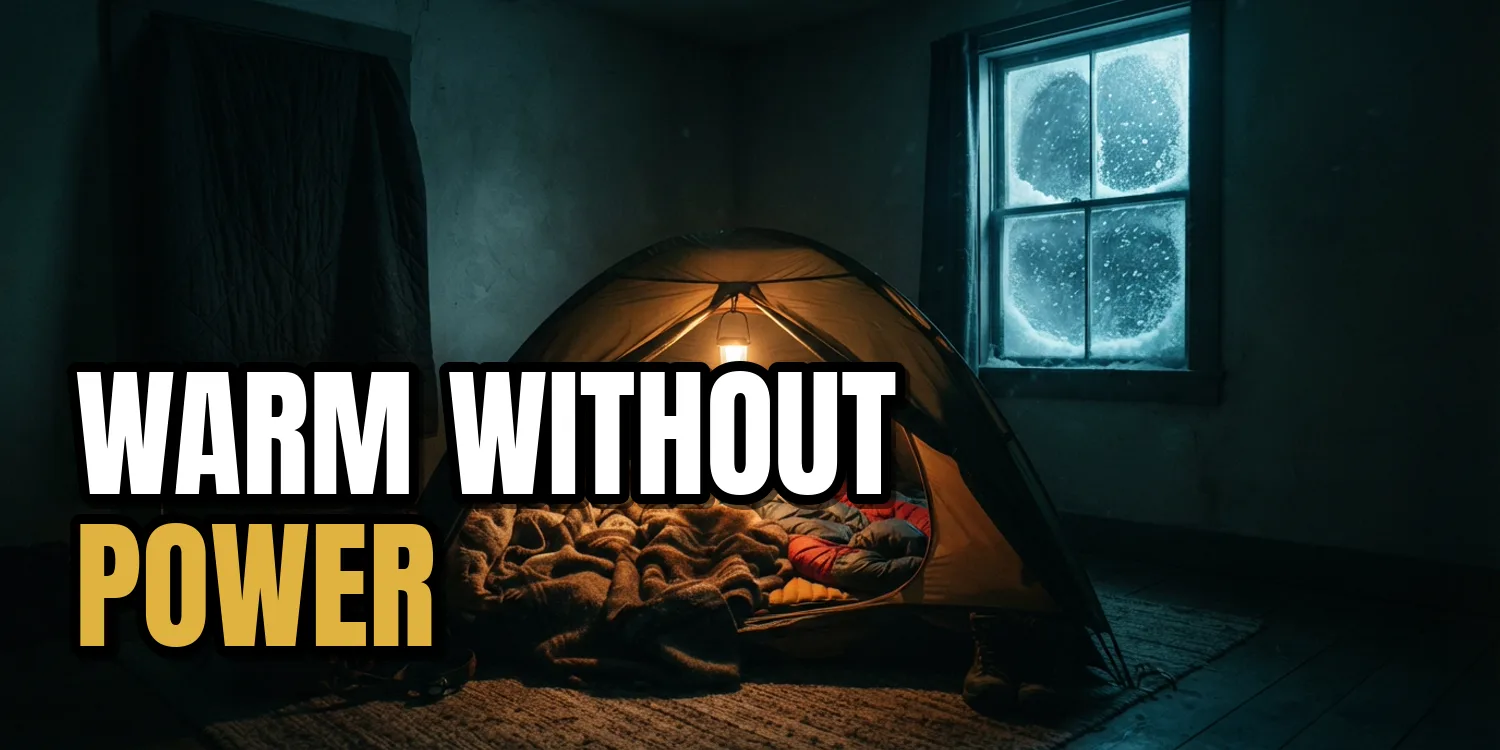
An ice storm takes the lines down at dusk, the furnace blower goes silent, and the house starts giving its heat back to the night. Most of what keeps a family safe over the next few days costs nothing and needs no fuel: a smaller space, better clothing, a warm bed and a few chores done before the pipes freeze. This guide covers those steps in the order you need them. Heaters come in only once the basics are in place, because a heater added to a cold, drafty house mostly burns fuel. Why winter storms take the power down in the first place, and how to read the warnings days ahead, is in our briefing on preparing for a winter storm grid failure.
How fast a house goes cold
The answer depends on how the house was built far more than on the weather report. During the February 2021 Texas freeze, an architect in Austin woke on the first morning of the outage to 62°F indoors in his rebuilt, airtight house. The neighbor's house, the same 1914 bungalow before the rebuild, read 36°F at the same hour (Green Builder Media, Cold Case). The same article sums up a 2020 Rocky Mountain Institute study: the tightest new homes stayed above 40°F for more than six days without power, while ordinary code-built homes fell below that much sooner.
Most American houses sit somewhere between those two. An older home with single-pane windows and thin wall insulation can lose its comfort in hours. A newer one buys you a day or two. Either way, the first night is the time to act, before the rooms are cold and everyone is tired. RMI's full report, Hours of Safety in Cold Weather, compares house types if you want to see where yours probably falls.
Power outage in winter: what to do in the first hour
While the house still holds its heat, do the jobs that get harder in the cold and the dark:
- Shut the doors to every room you will not use, and close the curtains and blinds on all of them.
- Pick the room the family will live and sleep in, and start carrying bedding, sleeping bags, coats and hats into it.
- Open the cabinet doors under the kitchen and bathroom sinks, and set the faucets on outside walls to a slow drip.
- Put fresh batteries in the CO detector and a battery lantern in the chosen room.
- Turn on a battery or crank radio for the outage estimate and any warming center announcements.
- Fill thermoses with hot water or coffee while the stove or kettle still works.
- Check on the older neighbor who lives alone, by phone or at their door.
Our long-term power outage guide covers the rest of that first day, from the refrigerator to the phones. This page stays on warmth.
Heat one room without electricity
The single most useful move is shrinking the space you are trying to keep warm. Prepper writers who have sat through multi-day outages in Canadian winters put it bluntly: forget heating the home and think small instead (More Than Just Surviving). Every person in that room gives off heat all day and all night, and a closed bedroom traps it, where a living room open to the stairs lets it drift away.
Choose the room by these traits, in this order:
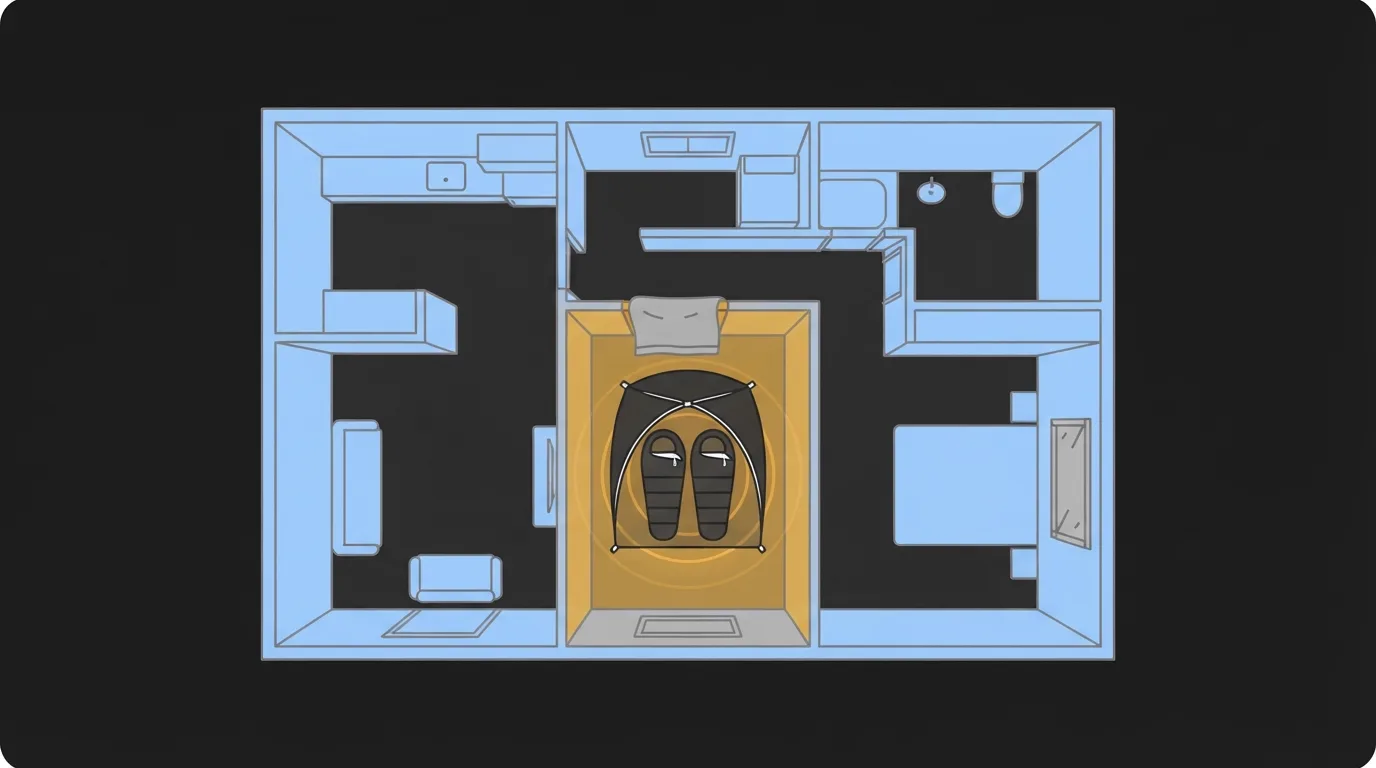
- Small. A bedroom of 120 to 200 square feet warms far faster than an open kitchen and family room.
- Few outside walls and windows. An interior room or one with a single window loses less heat through the glass.
- A door that shuts. Without one, hang a heavy blanket or quilt across the opening and tack it to the frame.
- Sun if you can get it. The Austin house in that Texas story warmed a little each afternoon through its south-facing windows, so a south room is a bonus.
Then seal the room. The Red Cross suggests covering windows with plastic from the inside to add a layer of insulation (Red Cross winter weather safety), and painter's plastic and duct tape from the emergency kit do the job. Roll a towel along the bottom of the door, lay rugs or extra blankets on a bare floor, and keep the curtains drawn after dark. During daylight, open the curtains only on a window the sun is hitting.
A tent inside the room
Once the room is sealed, a camping tent set up inside it adds one more shell. It encloses a tiny volume of air that the people in it warm quickly, and children tend to treat it as an adventure, which helps on the third cold night. Pitch it on a tarp with a blanket or foam pad under it, since the floor draws heat out of anyone lying on it. A reader comment on the same prepper page makes that point about basement camp-outs, where the slab is coldest.
No tent? A kitchen table draped with blankets to the floor makes a smaller version for one or two children. Mylar emergency blankets can line the tent walls or go over the top of a sleeping bag. They are cheap, they pack flat, and they reflect body heat back toward the sleeper.
Dress for a cold house
The Red Cross advice for winter is several loose, lightweight layers instead of one bulky sweater, adding a layer when you feel chilled and taking one off before you sweat. Damp clothing is the hidden problem in a cold house. The same page warns that wet clothing loses much of its insulating value and carries heat away from the body, so change out of anything damp right away, including socks after a trip outside to clear snow.
Indoors in a dark house, that means:
- a base layer of wool or synthetic long underwear, kept for the house and kept dry
- a fleece or wool sweater over it, with a down or insulated jacket for sitting still
- a knit hat and wool socks all day, and fingerless gloves for chores
- slippers or boots with a thick sole, because cold floors pull heat out of feet
Cotton jeans and sweatshirts are fine for a few hours, then they collect moisture and stop helping. If the family owns ski or hunting clothes, this is what they are for.
How to sleep warm in a cold house
Nights are the hard part, because the house is at its coldest and the body makes less heat while asleep. A sleeping bag rated for winter camping does more than any pile of comforters, since it closes around the sleeper. Put a pad, couch cushions or a folded blanket under it, then spread the household's blankets over the top.
The prepper writers above found that wearing too many clothes inside a bag works against you: the bag cannot trap the body's heat if the body is wrapped up away from it. A dry base layer and a hat are usually enough inside. Warm the foot of the bag before getting in with a hot water bottle wrapped in a towel, or a chemical hand warmer. The Red Cross wraps hot packs before they touch skin, and the same rule applies to children's feet in bed.
Put small children between adults, and let the family dog sleep in the room. A warm snack before bed and a trip to the bathroom just before lights out mean fewer cold trips out of the bag at 3 a.m.
Food and drink that keep you warm
Bodies make heat from food, so regular meals matter more in a cold house than at any other time. Hot drinks help twice: they warm the person holding them and they keep fluids up, which people neglect when they are cold and do not feel thirsty. The Red Cross advises plenty of warm fluids and avoiding caffeine and alcohol. A shot of whiskey feels warm going down, then makes the body lose heat faster through the skin.
A gas range can still cook meals with the power out if it lights by match, but it is never left on to warm the room. Our guide to what natural gas still runs without power explains which burners, water heaters and fireplaces keep working. A camp stove belongs outdoors. Our carbon monoxide guide explains where each burner may run. The easiest habit is to boil a big pot whenever something is cooking and fill every thermos in the house for later.
Keep the pipes from bursting
Water expands as it freezes, and the Red Cross points out that no pipe is strong enough to hold it (Red Cross, frozen pipes). The pipes that go first run along outside walls, through crawl spaces, garages and attics, and under sinks. Its prevention list fits a blackout well:
- Let cold water drip from faucets fed by exposed pipes. A trickle moving through the line keeps it from freezing.
- Leave the sink cabinet doors open so room air reaches the plumbing, and move cleaning chemicals up out of children's reach.
- Keep the garage door closed if water lines run through the garage.
If a faucet gives only a trickle, suspect a frozen section and leave that faucet open. The Red Cross warns against thawing pipes with a blowtorch, a kerosene or propane heater, or any open flame. Without power, towels soaked in hot water from the stove are the tool you have.
A water heater that sits outside or in an unheated garage is at risk too. Many outdoor tanks in Texas froze and split in 2021, and families still had no hot water after the power came back because plumbers could not get the parts. If the family leaves a house that will drop below freezing, my move would be to shut the main water valve and open the lowest faucet so the lines empty before the cold reaches them.
When heat is worth adding
Everything above slows the loss of heat. In a long outage in a northern state, you may still need to add some. Do that only with something built to run indoors, in the sealed room, with a battery carbon monoxide alarm beside it and someone awake to watch it. Our guide to safe indoor heaters for a power outage sorts electric, propane, kerosene and wood heat from the grills and job-site heaters that send families to the hospital every winter. If the plan is an electric heater on a generator, work out first what size generator your house needs, because a heater on high takes a large share of a portable unit's output.
A sealed small room makes any heater work less. A heater that can barely hold a whole floor near 50°F can keep one bundled bedroom comfortable for an hour before bed.
Watch the people, not the thermometer
Hypothermia can happen indoors. The Red Cross lists its signs as shivering, numbness or weakness, a glassy stare, apathy or poor judgment, and loss of consciousness (Red Cross, hypothermia and frostbite). The ones that matter most in a dark house are the quiet ones. An older parent who stops shivering, gets vague and wants only to sleep needs attention, and so does a child who is unusually listless.
If you see those signs, call 911 and move the person to the warmest spot you have. Take off any damp clothing, then wrap them in dry layers and blankets. Warm the trunk first and do it gradually. The Red Cross warns against warming someone too fast, such as in a hot bath. Older adults, babies, and anyone with heart or lung disease get cold faster than the rest of the household, so check on them every few hours, including overnight. Our guide to hypothermia at home in a winter blackout covers the signs in older adults and infants, the full first aid steps and frostbite.
When to leave for a warming center
Staying home is the goal, but it is not a test. Ready.gov's advice for extreme temperatures in an outage is to go to a community location that has power (Ready.gov, power outages), and local officials announce warming centers on the radio. Go in daylight, before the roads ice over again and before anyone is already in trouble. Signs it is time: someone in the house shows the early signs of hypothermia, a baby or a frail adult cannot be kept warm in the bundled room, a power-dependent medical device is running out of battery, or the coming night is forecast colder than the one you just got through.
If you use the car to warm up on the way, keep it in open air with the tailpipe clear of snow. Our emergency plan for elderly parents covers how to decide in advance who moves first and where they go.
My take: what to have before the first storm
For a family in a cold state, my pick would be one winter-rated sleeping bag per person before any heater, a tent big enough for the household, a roll of plastic sheeting with a roll of duct tape, and a battery CO detector for the room you will sleep in. Add wool hats and socks for everyone and two or three good thermoses. That list fits in a closet, uses no fuel and works in an apartment as well as a farmhouse.
Then pick the room tonight, while the lights are on, and walk the house to find the pipes along outside walls. A family that has already chosen its warm room and knows which faucets to drip will be settled in before the neighbors have found the flashlights.
Frequently asked questions
Which room should we sleep in when the heat is off?
Do candles heat a room?
Is it safe to sleep in the car with the engine on?
How cold is too cold to stay home?

Written by
Walt Brenner
Grid-down threats, home security and family plans
Walt Brenner is the pen name of the writer who covers grid-down threats, home security and family emergency plans for Dark Grid Prep. He draws on FEMA and Ready.gov guidance, utility and government reports, manufacturer manuals and long-running prepper forums, and he says plainly where those sources disagree. His beat is the household: what a family of four in a suburb or on a rural lot should have, know and do before the lights go out.
Last checked 2026-11-12
Comments
No comments yet. Questions and your own experience are welcome.
Thank you. Your comment will appear once it has been reviewed.