Medical prep when help is delayed
Hypothermia at home in a winter blackout
You can get hypothermia indoors: when the heat goes out, a house in the low 60s is enough to chill an older adult, a baby or someone who is ill, slowly and without much shivering. Watch for confusion, sleepiness, slurred speech and clumsy hands, call 911, and rewarm the person gently from the chest outward with dry blankets, never in a hot bath.
Most people picture hypothermia as something that happens to a hiker caught in a storm or a person who falls through ice. In a long winter outage it happens in bedrooms and recliners. The furnace blower needs electricity even when the fuel is gas or oil, so a house with no power loses its heat whatever the fuel, and it keeps cooling for as long as the outage lasts. Nobody in the house feels a single dramatic moment, which is exactly why the early signs get missed.
This guide is written from the Red Cross first aid steps for hypothermia and frostbite, the National Institute on Aging's page on cold weather safety for older adults, the CDC's lists of warning signs, and the World Health Organization's housing guidelines. It covers recognizing and treating cold injury. Keeping the house warm in the first place, from sealing one room to choosing a heater, is in our guide to staying warm without power in winter. Nothing here replaces a first aid course, and the Red Cross runs them in most counties.
Indoor hypothermia: how a house gets cold enough
The NIA defines hypothermia as a core body temperature below 95°F. That sounds like it would take a night outdoors in deep snow, but the same page notes it can happen above 40°F when a person is chilled by rain, sweat or wet clothing, and that about 20% of injuries from cold exposure occur in the home. Inside a dark house, the conditions stack up slowly. How fast the rooms cool depends on insulation, wind and the temperature outside, so the only way to know your own house is to measure it.
Several things in a blackout make it worse. People sit still for hours because there is nothing to do and no light to do it by. They skip hot meals because the electric stove is dead. A damp layer from shoveling snow or hauling water stays on, and the body spends heat drying it. Some people take a drink to feel warmer, and the NIA warns that alcohol makes the body lose heat.
The death toll from the February 2021 Texas freeze shows how this ends when nobody is watching. Texas officials revised the storm's count to 246 deaths, and hypothermia was the leading cause, according to Insurance Journal's report on the revised figures. While the storm was still on, ABC13 reported suspected hypothermia deaths mounting in homes that had lost their heat.
How cold is too cold inside a house?
There is no single number that is safe for everyone, and the official sources say so. The WHO's Housing and Health Guidelines set 18°C, about 64°F, as the minimum indoor temperature for healthy people in cold seasons, and they suggest a higher floor for older people, young children and anyone with heart or lung disease. The WHO also admits the evidence is not precise enough to name the exact point where harm starts.
The NIA is more specific for older adults: set the heat to at least 68°F, because "even mildly cool homes with temperatures from 60 to 65°F can lead to hypothermia in older adults." That range is where a house without power will sit within hours on a freezing night.
For a household in an outage, I would use three working thresholds and a cheap battery thermometer in the room where people sleep:
- Above about 64°F, a healthy adult in layers is fine, but anyone frail or very young needs extra layers, a hat and a warm drink.
- Between 60 and 64°F, older adults, babies and sick family members move into the smallest, best sealed room, and someone checks them every couple of hours.
- Below 60°F in the warmest room you have, with no safe way to bring it up, it is time to plan a move to a warming center or a home with power.
These are my own lines drawn from the NIA and WHO figures, not a published standard. They exist so that nobody has to make the call at 2 a.m. while tired and cold.
Signs of hypothermia to watch for
The CDC lists the warning signs in adults as shivering, exhaustion, confusion, fumbling hands, memory loss, slurred speech and drowsiness. The Red Cross list adds numbness or weakness, a glassy stare, apathy or impaired judgment, and loss of consciousness. The NIA mentions cold hands and feet, a puffy or swollen face, pale skin, and feeling sleepy, angry or confused as early symptoms, followed by stiff and jerky arm and leg movements, a slow heartbeat or breathing, and unconsciousness as the cold continues.
Two of those deserve emphasis in a dark house. Confusion and drowsiness look exactly like a tired person on a long, boring night. And shivering is a good sign in one respect, because it means the body is still fighting. When a cold person stops shivering without having warmed up, they are getting worse.
Signs of hypothermia in the elderly
Older adults are the group most likely to be harmed, and the least likely to raise the alarm themselves. The NIA explains that changes with age make it harder to notice the body getting too cold, and that hypothermia "affects the brain and makes it difficult to think clearly," so a person may not realize they need help. It names conditions that make staying warm harder: diabetes, which can slow blood flow to the skin; thyroid problems; Parkinson's disease and arthritis, which make it hard to add clothes or pull up a blanket; and memory problems. Some prescription and over-the-counter medicines affect body heat as well, and the NIA suggests asking a doctor which ones.
In practice, the signs in an older parent are often behavioral. They become short-tempered or muddled, fumble with a cup, speak more slowly, or want to stay in the chair and sleep. Their face may look puffy and pale. If they live alone, nobody sees any of it, which is the case our emergency plan for elderly parents is built around.
Signs in babies and small children
The CDC gives two signs in infants: bright red, cold skin and very low energy. A baby may not shiver at all. Red cheeks on a cold baby can look healthy, so feel the skin on the chest and back, not just the hands. A child who is unusually quiet, floppy or uninterested in feeding in a cold house needs warming and a call for help.
Hypothermia first aid, step by step
The Red Cross states the goal plainly: restore normal body temperature and care for any other conditions while you wait for EMS. Its steps, with the CDC's and NIA's details folded in, run in this order:
- Call 911 or your local emergency number. The NIA calls hypothermia a medical emergency, and a dispatcher can tell you whether help can reach you and what to do meanwhile.
- Move the person gently to the warmest place you have, supporting them rather than letting them walk if they are unsteady.
- Check breathing and circulation, and start rescue breathing and CPR if needed.
- Remove wet clothing and dry the skin.
- Wrap them in dry blankets, towels, coats or a sleeping bag, including the head and neck.
- Warm the core first: the chest, abdomen, neck and groin. The CDC suggests skin-to-skin contact under loose dry layers if nothing else is available.
- Use hot water bottles or chemical heat packs only after wrapping them in a towel or blanket, and place them on the trunk and in the armpits rather than on the hands and feet.
- If the person is awake and can swallow, give a warm drink without alcohol or caffeine. Give nothing by mouth to someone who is drowsy or unresponsive.
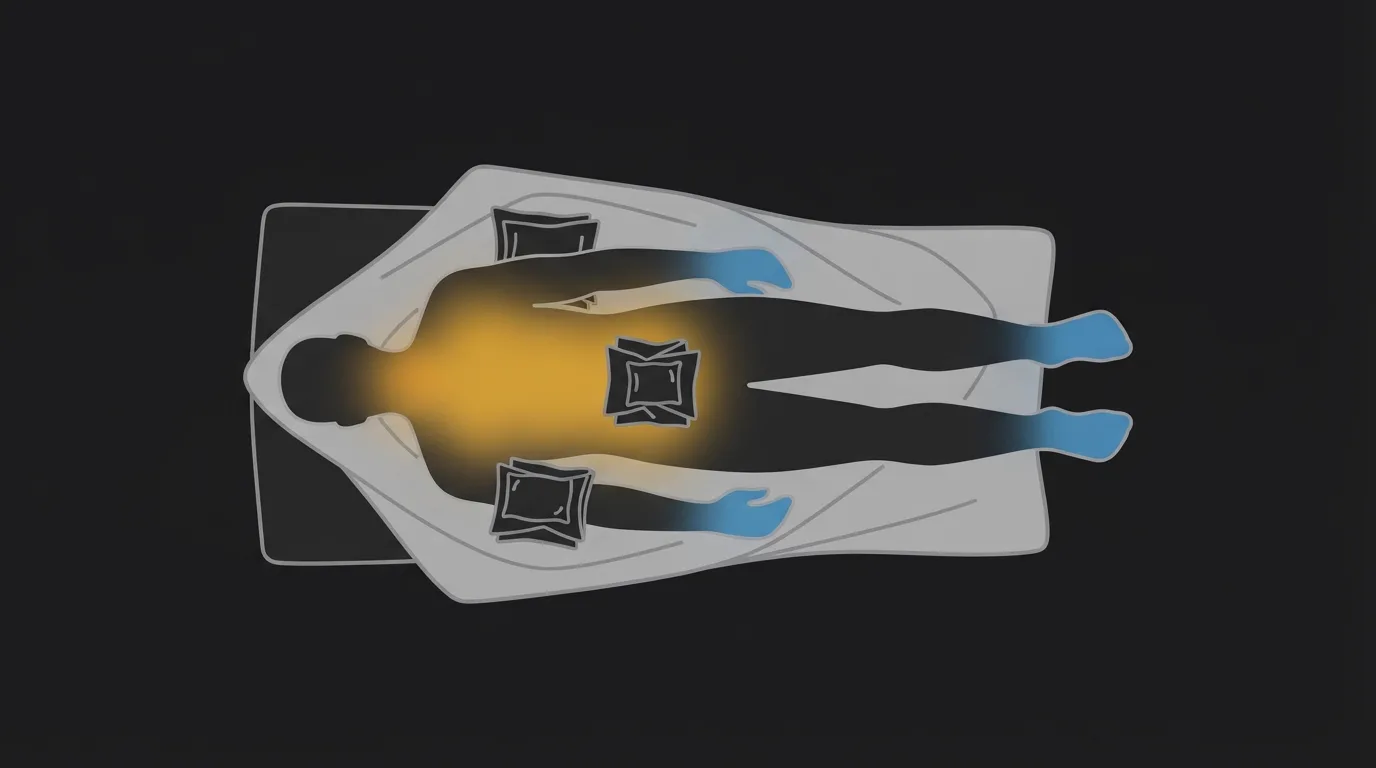
Once the person feels warmer, the CDC advises keeping them dry and wrapped, head and neck included. They should stay in the warm room and be watched for the rest of the night, even if they say they feel fine.
What not to do
The Red Cross warns against warming someone too fast, and it gives immersion in warm water as the example. So skip the hot bath or shower, even if the water heater still holds some heat. Do not rub or massage cold limbs. Keep heat packs and hot water bottles off bare skin, since a person with numb skin will not feel a burn. Leave the bottle of whiskey in the cupboard as well.
Nor should a cold, drowsy person be left alone to sleep it off in a cold room. Sleepiness is one of the signs, and it hides the others.
Frostbite on the same night
Fingers, toes, ears and the nose can freeze while someone is clearing snow, fetching fuel or sleeping with a hand out of the covers. The Red Cross signs are lack of feeling in the area and skin that looks waxy, feels cold, or is discolored: flushed, white or gray, yellow or blue. Its steps are to get them indoors to warmth, never rub the area, soak it in warm water at 100 to 105°F until it turns red and warm, then bandage it loosely with dry sterile dressings and gauze between the fingers or toes. Do not break blisters, and do not let the area refreeze, which means not thawing it at all if the person has to go back out into the cold. Treat hypothermia first if someone has both.
When help is slow to come
In a widespread winter outage, 911 may answer and still have no ambulance free for an hour or more, and icy roads slow every crew. Cell service can also fail once tower batteries run down, as our page on whether cell phones work when the grid goes down explains. Plan for both before the storm.
If you cannot get through, carry on with the rewarming and keep an eye on their breathing. If it is safe, send someone to the nearest fire station or to a neighbor with a landline or a working phone. If the person is awake, warming and stable, and the roads are passable, driving them to an emergency room in a warm car may be quicker than waiting. Keep the tailpipe clear of snow if the engine runs while parked.
Write down the time you found them, what you saw, and what you did. A paramedic or doctor will want that, and in the dark it is easy to lose track of an hour. Our home trauma kit checklist includes the notebook, the headlamp and the emergency blankets that belong with this job.
Keeping hypothermia from starting
Most indoor hypothermia is preventable with things a household already owns. The NIA's indoor advice is simple: rolled towels at the bottom of doors, curtains and blinds closed, socks, slippers and blankets during the day, long underwear and a head covering at night, enough food, and little or no alcohol. It also asks older adults to have someone check on them, and to stay with a relative or friend if an outage leaves them without heat.
Two habits make the biggest difference in a blackout. The first is a round: someone checks every person in the house every two or three hours, overnight included, asking a simple question and watching how they answer. A slurred or muddled reply is a reason to check further. The second is warm food and drink on a schedule, from a camp stove used outdoors or a thermos filled while there was power. Any heat source used inside must be rated for indoor use and run with a battery-powered carbon monoxide alarm in the same room. Our guides to safe indoor heaters and carbon monoxide safety in an outage cover that side, because a sealed room with the wrong heater trades one emergency for another.
People who rely on powered equipment are at greater risk of being stuck in a cold house, because they cannot easily leave. If someone in the family uses oxygen or a CPAP, read the blackout plan for CPAP and home oxygen and decide where they will go before the first storm. A diabetic who is cold has a second reason to stay warm, since insulin itself must not freeze. The insulin storage guide covers the cooler.
Hypothermia and heat stroke in a blackout: the summer side
The same failure runs the other way in July. A house with no air conditioning can climb past what an older body can shed, and the warning signs are just as easy to mistake for a person who is simply tired. The CDC's NIOSH page on heat-related illnesses lists heat exhaustion as heavy sweating, weakness, cool, pale and clammy skin, a fast weak pulse, cramps, dizziness, nausea and headache. Get them into the coolest room, loosen their clothing, apply cool wet cloths and give sips of water.
Heat stroke is the emergency. CDC guidance describes a body temperature above 103°F, red, hot and dry skin, a rapid strong pulse, throbbing headache and confusion or unconsciousness. Call 911, get them out of the heat, and cool them with wet cloths or a cool bath while you wait. The two conditions call for opposite first aid but share one rule: in an outage, the people most at risk are the oldest, the youngest and the sick, and they need a check on a schedule. The fluid side of a hot outage, from the signs of dehydration to oral rehydration packets, is in our guide to dehydration and oral rehydration in a long outage.
What I'd do before this winter's first storm
I would buy two cheap battery thermometers, one for the room the family will sleep in and one for the coldest bedroom, and find out this winter how fast the house actually cools. Run the test during a weekend grid-down drill by turning the thermostat off for an evening. That number tells you how many hours you have before an older family member is in the 60 to 65°F band the NIA warns about.
Then I would print the first aid steps above and tape them inside the lid of the box that holds the emergency blankets, the wrapped heat packs and two thermoses. In the dark, with a confused parent in the chair, nobody remembers to warm the chest before the hands. I would also agree now, out loud, on the room temperature at which the family leaves for a warming center, so the decision does not wait until someone is already in trouble. The rest of the household checklist is on our power outage checklist, and the other medical guides are in the medical section.
Frequently asked questions
Can you get hypothermia inside your own house?
What temperature is too cold for an elderly person indoors?
Should I put someone with hypothermia in a warm bath?
Is it safe to give a cold person coffee or a drink of whiskey?
What if 911 cannot get to us?

Written by
Walt Brenner
Grid-down threats, home security and family plans
Walt Brenner is the pen name of the writer who covers grid-down threats, home security and family emergency plans for Dark Grid Prep. He draws on FEMA and Ready.gov guidance, utility and government reports, manufacturer manuals and long-running prepper forums, and he says plainly where those sources disagree. His beat is the household: what a family of four in a suburb or on a rural lot should have, know and do before the lights go out.
Last checked 2026-11-18
Comments
No comments yet. Questions and your own experience are welcome.
Thank you. Your comment will appear once it has been reviewed.