Grid-down living
Power outage food safety checker
A closed refrigerator keeps food safe for about four hours without power. A closed freezer holds for about 48 hours when full and 24 when half full. After that, perishables that sat above 40°F for more than two hours get thrown out, and frozen food that still has ice crystals can go back in the freezer. Enter your outage below for a keep or toss list.
The power comes back after a night, or after three days, and the same question lands in every kitchen: what in here can we still eat? The federal answer fits on one card, and most families have never seen it. This checker applies the USDA's power outage rules and the food-by-food chart published on FoodSafety.gov to your fridge or freezer. Tell it how long the power was off, how full the freezer was, whether the door stayed shut and what the thermometer reads, and it sorts your food into what stays, what goes and what depends on one more check.
Check your fridge or freezer
The checker is a guide built on the federal rules, and it leans cautious wherever you cannot measure. It cannot see your food. Anything with an odd smell, color or texture goes out whatever the list says, and so does anything that floodwater touched.
The five rules the checker follows
Everything the form does comes from a short set of rules that USDA's Food Safety and Inspection Service has repeated in its emergency guidance for years, and that Ready.gov prints on its power outage page. FSIS spelled them out in its storm advisory carried by Food Safety News:
- The refrigerator gets about four hours. Unopened, it keeps food safely cold that long. After four hours without power, FSIS says to discard refrigerated perishables such as meat, poultry, fish, soft cheese, milk, eggs, leftovers and deli items.
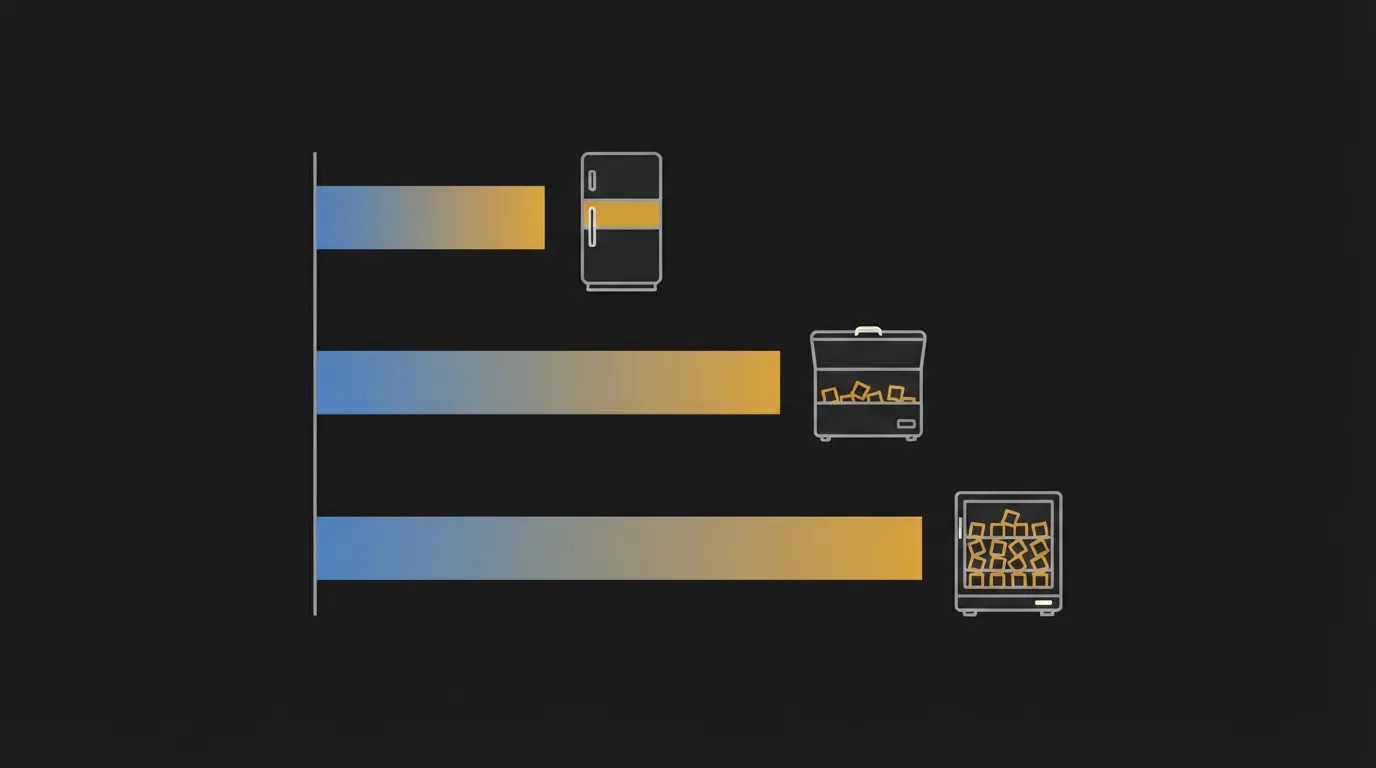
- The freezer gets about two days if it is full. A full freezer holds its temperature for roughly 48 hours with the door closed, and a half-full one for about 24.
- 40°F is the line, and two hours is the limit above it. Ready.gov puts it plainly: throw away food that has been at 40 degrees or warmer for two hours or more, or that has an unusual odor, color or texture.
- Ice crystals mean you can refreeze. Thawed or partly thawed food may go back in the freezer if it still holds ice crystals or reads 40°F or below.
- Never taste food to test it. The bacteria that make people sick do not change how food smells or looks.
That last rule is the one people break most. A USDA food safety specialist explained it to Fox Weather: an off smell or a slimy feel is spoilage, but the bacteria behind foodborne illness are separate, and you cannot see, taste or smell them. A pork chop can smell perfectly fine and still be the reason a family spends the next day in the bathroom.
How long is food good in the fridge without power?
About four hours, if nobody opens the door. That figure assumes a fridge that was at 40°F or colder when the power failed, in a kitchen at ordinary room temperature. A fridge that runs warm, a summer kitchen, or a door that keeps opening while everyone looks for snacks all shorten it.
An appliance thermometer turns the guess into a reading, and it is the cheapest prep in this whole topic. FSIS tells households to keep one in both the refrigerator and the freezer, with the fridge at 40°F or below and the freezer at 0°F or below before trouble starts. When the power returns, the reading on the shelf tells you more than the clock does. If it still says 40°F or colder, the food never left the safe zone, however long the outage ran.
Without a thermometer, the checker uses the clock. Up to four hours with the door shut, it calls everything safe. Past that, it applies the food-by-food chart. If the door was opened several times, it starts sorting after two hours. A fridge that has been opened again and again has no reliable four-hour window left, and every federal page on the subject ends with the same advice: when in doubt, throw it out.
If you know the outage will run long, the four hours are for moving food, not for waiting. Ready.gov says to use coolers with ice once you need them. Pack the milk, meat, leftovers and anything for a baby into a cooler with frozen jugs or ice, and leave the fridge for the condiments and the produce that can sit warm.
Freezer food after a power outage: refreeze or toss
Frozen food gives you far more time, and the deciding question is whether it is still partly frozen. A packed freezer works like a block of ice: the frozen packages keep each other cold. That is why FSIS gives a full freezer about 48 hours and a half-full one only about 24, and why it tells households to group food together in the freezer before a storm.
When the power comes back, check the freezer thermometer if you have one. A reading of 40°F or below means everything can be refrozen. With no thermometer, open the packages one at a time. Steaks, chicken, fillets, casseroles and dairy that still hold ice crystals and feel as cold as if they had been in the fridge can go straight back in. Fish and milk lose some texture, and fruit and vegetables come out softer, but none of that is a safety problem.
Food that thawed completely and sat warm is a different case, and here the chart splits by food. Meat, poultry, seafood, soft and shredded cheese, milk, egg products, frozen dinners and casseroles go out once they have sat above 40°F past the two-hour limit. Bread, rolls, plain cakes, waffles, bagels, flour, nuts and hard cheese can be refrozen even after that. Fruit and juice can too, unless mold, a yeasty smell or sliminess shows up. Vegetables get a longer allowance: the chart says to discard them after six hours above 40°F. Ice cream and frozen yogurt that have softened are thrown out in every case.
Refrigerator foods to keep and throw out
These are the refrigerator lines from the federal chart, as reproduced in full by the Center for Science in the Public Interest (CSPI, food safety during a power outage). They apply to food that stayed warmer than 40°F longer than two hours.
Throw out
- Raw or cooked meat, poultry, fish and seafood, plus lunch meat, hot dogs and bacon
- Milk, cream, sour cream, yogurt, soy milk and opened baby formula
- Eggs, egg dishes, custard, pudding and quiche
- Soft, shredded and low-fat cheese
- Cooked pasta, rice and potatoes, pizza, casseroles, soups and leftovers
- Cut fruit and bagged pre-washed greens
- Creamy dressings, opened spaghetti sauce, fish sauce and oyster sauce
- Opened mayonnaise, tartar sauce and horseradish, once they pass 50°F for over 8 hours
Keep
- Hard cheese, processed cheese and grated Parmesan
- Butter and margarine
- Whole fresh fruit, raw vegetables, mushrooms and herbs
- Ketchup, mustard, pickles, jelly, peanut butter, soy and barbecue sauce
- Bread, rolls, tortillas, muffins and fruit pies
The pattern is easy to remember once you see it. Food that is moist, low in acid and rich in protein goes: meat, dairy, eggs, cooked grains, anything with a creamy sauce. Food that is dry, salty, sugary, acidic or aged stays: bread, hard cheese, butter, pickles, jam, whole produce. Mayonnaise sits in between because the commercial kind is acidic, which is why it gets its own looser line of 50°F for eight hours.
A worked example: a winter storm and a half-full freezer
Say an ice storm cuts the power at 6 p.m. on a Friday and it comes back at midnight on Saturday, 30 hours later. The household has no appliance thermometer. The refrigerator was opened twice for dinner. The chest freezer in the garage was about half full and stayed shut.
- The refrigerator: 30 hours is far past four, so the chart applies. The milk, the leftover chili, the deli turkey, the eggs and the shredded cheese go. The block of cheddar, the butter, the ketchup, the pickles, the apples and the carrots stay. The opened jar of mayonnaise goes too, since nobody knows how warm the fridge got and eight hours have long passed.
- The freezer: 30 hours is past the 24-hour mark for a half-full freezer, so each package needs a look. The ground beef still has a frozen core and ice crystals, so it goes back in. Two chicken breasts on the top are soft all the way through with no ice left, and with no thermometer to prove they stayed cold, they go. The loaf of bread and the bag of frozen waffles can be refrozen either way.
Run the same freezer with a thermometer that reads 38°F and the answer changes: everything in it can be refrozen, including the soft chicken, because a reading at or under 40°F is the federal test. That one reading saves a few dollars of chicken here and a few hundred dollars of meat in a deep chest freezer during a longer outage.
Keeping food cold when the power goes out
The best time to save the food is the day before the outage, when a storm is in the forecast. FSIS lists the steps, and they cost almost nothing:
- Hang a thermometer in each appliance and check that the fridge sits at 40°F or less and the freezer at 0°F or less.
- Freeze water. Fill the empty space in the freezer with jugs or bottles of water. Once the power fails, move them to the fridge or pack them around food in a cooler. They double as drinking water as they melt, which our guide to water for a two-week outage counts on.
- Freeze what you will not need right away. Leftovers, milk and fresh meat last longer frozen than chilled once the power fails.
- Group frozen food together so the packages keep each other cold.
- Have coolers and know where to buy ice. FSIS says to plan where you would get dry ice or block ice. Its figure is that 50 pounds of dry ice should hold a full 18-cubic-foot freezer for two days.
During the outage, keep both doors shut and eat in a set order. Start with what is in the fridge, move to the freezer food that thaws first, and save the shelf-stable pantry for last. A two-week emergency food supply built around food that never needed a fridge is what takes the pressure off this whole decision. Handle dry ice with gloves and never leave it in a closed car or a small sealed room, since it gives off carbon dioxide as it turns to gas.
A generator changes the arithmetic. Running the refrigerator and freezer for an hour or two at a time keeps them under the line without running all day. If you are working out what to plug in, our generator sizing guide and the solar generator runtime calculator both use the fridge as their first load. The generator stays outdoors, well away from the house, as our carbon monoxide guide explains.
Winter outages and the snowbank
When it is 20°F outside, setting the food on the back porch looks obvious. USDA advises against it. Its specialist told Fox Weather that the temperature outdoors swings through the day and can climb high enough to make food unsafe, sun can thaw a package on a cold afternoon, and animals get into food left out. USDA's own answer page adds that animals may carry bacteria and food an animal touched should never be eaten.
The cold still helps if you use it to make ice. Fill buckets, empty milk jugs or cake pans with water, set them outside overnight, and bring the blocks in to load the refrigerator, the freezer or a cooler. A big block lasts much longer than a bag of cubes. An unheated garage is safer than a snowbank, but it still needs a thermometer next to the food, because a sunny wall can warm one corner well above the outdoor air. Our guide to staying warm without power in winter covers the people side of the same storm.
Medicine, insulin and baby formula
The food chart does not cover medicine. Ready.gov says that when the power is out for more than a day, any medication that should be refrigerated is discarded unless its label says otherwise, and that you should call your doctor or pharmacist for a new supply. Insulin has its own rules on time out of the fridge, and our page on storing insulin without power goes through them. Opened baby formula is on the chart's discard list after two warm hours, so a family with an infant should keep unopened ready-to-feed or powdered formula in the pantry and mix only what the baby will drink.
After the outage: cleanup and the bill
Once the food is sorted, clean the refrigerator before restocking. Spilled juices from thawed meat are the main source of the smell, and they can drip onto shelves below. Wash the shelves and drawers with hot soapy water, and leave the door open for a while to air it out. If floodwater got into the kitchen, the rules are stricter: FSIS says to throw away any food that was not in a waterproof container and might have touched the water, along with wooden cutting boards and baby bottle nipples.
Before you restock, make one phone call. CSPI notes that some homeowner's insurance policies and some power companies reimburse the cost of food lost in an outage. Take a photo of the trash bags and write down what went in them, since a list beats a guess when the claim is filed.
What I would do
I would buy two appliance thermometers before anything else on this site, one for the fridge and one for the freezer. They cost less than a pound of ground beef and they turn every hard call in this article into a reading. Next, I would keep three or four jugs of water frozen in the freezer all year, because they fill dead space, slow the thaw and become ice for a cooler on day two.
When the power goes out, I would leave the doors shut for the first few hours and plan meals from the fridge first. If the forecast says the power will be off longer than four hours, I would move the meat, dairy and leftovers into a cooler early instead of waiting to see. And when the lights come back, I would trust the thermometer and the ice crystals and skip the sniff test. The chart throws out less than most people expect, and following it is still cheaper than a doctor's visit. The power outage checklist puts the fridge on the first-hour list for that reason, and the longer view is in our guide to surviving a long-term power outage.
Frequently asked questions
Can I refreeze meat that thawed in the freezer during the outage?
Is freezer food still good after 24 hours without power?
Can I keep food outside in the snow during a winter outage?
Will insurance pay for the food I threw out?
Does cooking food that sat out make it safe again?

Written by
Walt Brenner
Grid-down threats, home security and family plans
Walt Brenner is the pen name of the writer who covers grid-down threats, home security and family emergency plans for Dark Grid Prep. He draws on FEMA and Ready.gov guidance, utility and government reports, manufacturer manuals and long-running prepper forums, and he says plainly where those sources disagree. His beat is the household: what a family of four in a suburb or on a rural lot should have, know and do before the lights go out.
Last checked 2026-11-17
Comments
No comments yet. Questions and your own experience are welcome.
Thank you. Your comment will appear once it has been reviewed.