Priorities
The rule of threes in survival
In a blackout, handle breathable air first, then shelter from heat or cold, then water, then food. Those four steps are the useful part of the rule of threes, and the numbers beside them mislead when you treat them as a deadline.
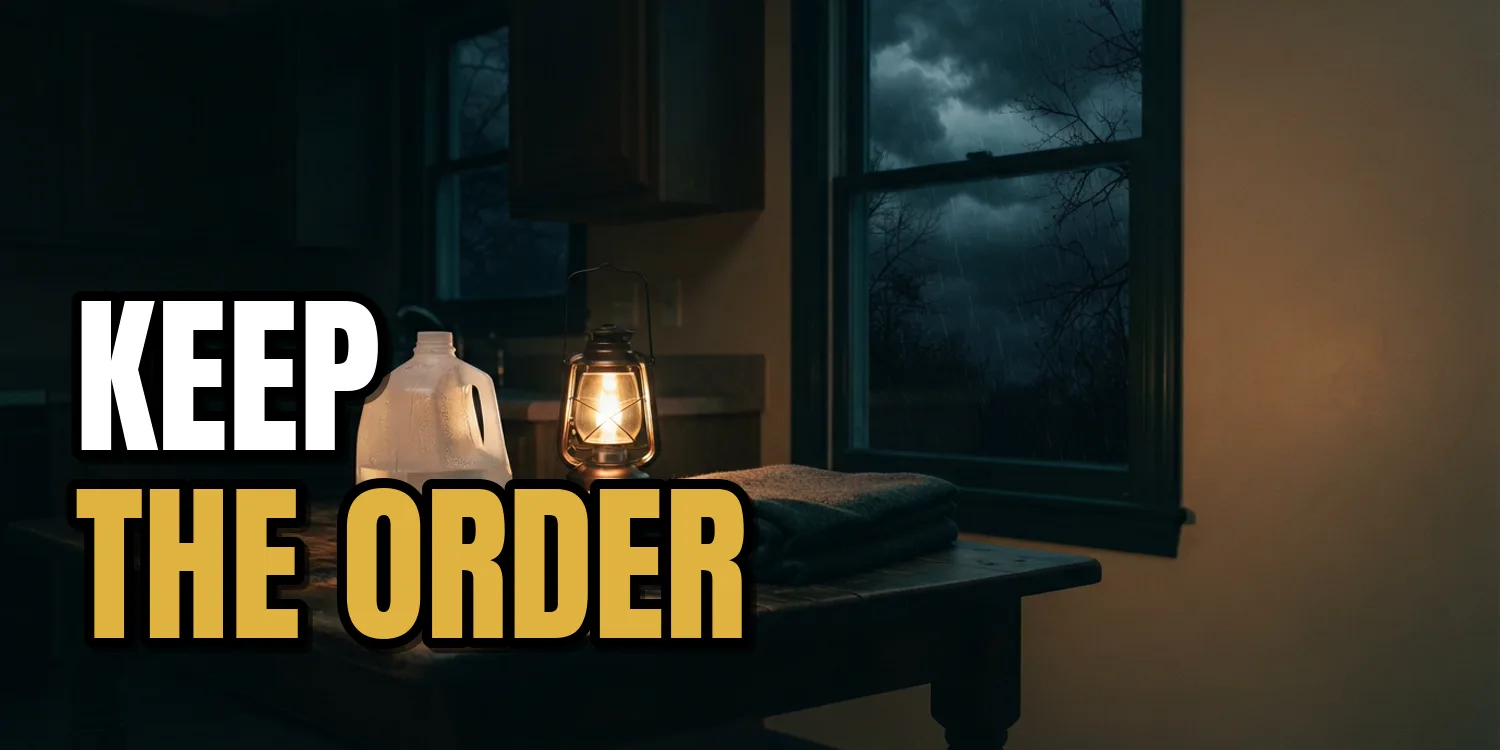
Keep that order and drop any stopwatch you were tempted to start. The figures attached to it are a memory aid. Wikipedia's article on the rule of threes calls them a generalization that can help you decide what to handle first when a situation is life-threatening. The article is frank that they lack scientific accuracy. Each later line assumes the earlier needs are already met.
The short version sits in our prepper vocabulary guide. A household that memorizes the numbers and ignores the conditions around them will buy and drill in the wrong order.
What the four lines actually say
Wikipedia records the standard version in four lines. A person can last about three minutes without breathable air, up to the point of passing out. The shelter line gives about three hours in extreme heat or cold. Going without a drink is given about three days, and going without food about three weeks.
No one has produced a document that shows who coined the rhyme. The lines travel through outdoor courses, military survival training and scouting, so the sentence you hear on a campfire weekend may differ from the sentence on a forum. Some instructors add lines the four-line version leaves out: severe bleeding, an immediate threat, hope, or a few seconds to make a decision. Those extras sit outside the four lines recorded above. Memorize those four, and use them as an order of work.
The cascade is the part people skip. With no breathable air, the shelter line never begins. If the body is already losing the fight with heat or cold, the drinking-water figure is describing a different emergency from the one in the room. Prepping Expert, writing for preppers, calls the device a teaching aid for priorities and tells readers to treat every number as "roughly, sometimes." The wording exists because it is easy to remember.
What the order gets right at home
Homes in the United States tend to fail in that same order when the power stays off. Smoke, carbon monoxide and a room that is too hot or too cold show up before real thirst. Thirst shows up before anyone is starving. That sequence is the part to keep when you buy supplies and when you practice.
It lines up with the buying order in prepping for beginners: the first 30 days. Water in week one, food in week two, heat and light in week three. Ready.gov's basic kit page asks households to be able to get by for several days on stored food, water and other supplies. Those several days are a pantry target. The rhyme tells you which problem to handle first on the night the lights go out. Someone who can recite the figures and still has an empty water shelf has kept the memory trick and missed the point of it.
People who teach the rhyme usually mean an order of work. The lines were phrased so they would stick. Teachers who use them treat them as a sequence, and the hours and days are there to make the sequence memorable. A second distinction sits beside that one. Staying alive is a lower bar than staying able to think, walk and help yourself. Cold, early dehydration and a skipped meal all take function away while a person is still nowhere near the survival ceiling printed on a poster.
Air, once you are indoors
For a family inside a house, the air line means air that is safe to breathe. Smoke from a fire, a sealed room, and carbon monoxide from a generator, a camp stove or a charcoal grill brought inside all qualify. A pool game built around holding your breath is a different subject, and a dangerous one to rehearse. The Red Cross power outage page states the machine rule in one line: never use a generator, an outdoor stove or a heater indoors. Our guide to carbon monoxide safety during a power outage covers detectors, where they go, and why the first days are the dangerous ones.
Wikipedia times the air line to unconsciousness when there is no breathable air. The same article notes that an average person can hold their breath for about 30 to 90 seconds. The posted figure is already longer than a typical voluntary hold, which is one reason to keep it out of family practice. Drills should cover detectors, utility shutoffs and who leaves the house. Timed breath holds stay out of them.
Some instructors park severe bleeding on that same short span, an extra the four lines do not list, because a bad bleed can kill before anyone thinks about water. That is a solid reason to learn direct pressure before you memorize a poster. Stop the bleed basics covers pressure and where a tourniquet fits in a home kit. Air you cannot breathe and blood you cannot keep are both problems for the first hour. A row of water jugs answers a later problem.
Shelter, and why the hours swing
This line swings wider than the other three. Prepping Expert calls the shelter figure the least reliable of the four, because shelter can mean minutes in cold water or days of mild, dry weather. A house that loses heat in a hard freeze, a closed car in summer traffic, and a mild night in a dry sleeping bag are different problems under one word.
Cold water is the fast end, and two clocks are tangled together there. Cold shock comes first. The National Center for Cold Water Safety warns that if the head is underwater during the gasp, drowning is immediate. Without a life jacket, the person goes under. The center's hypothermia page puts the next stage later: an average-sized adult needs about thirty minutes of immersion to develop hypothermia, even in water near freezing. A caption measured in hours fits neither the gasp nor that half hour, which is why a lake in January is a poor place to trust the poster.
The same hypothermia page notes that a person can become badly chilled on land without ever entering the water, whenever heat leaves faster than the body can replace it. Wind, wet clothing and a living room that has fallen to the outdoor temperature all belong there. In a winter outage, shelter means a room the household can keep habitable. Staying warm without power in winter and hypothermia during a power outage are the two pages for that job, and both are about the house.
Heat runs the other way, and it steals time from the drinking-water figure. Wikipedia's notes on accuracy say that without shelter, once the air is warmer than room temperature, dehydration can come on fast and death can follow in a matter of hours rather than after days without water. An afternoon in a closed house during a summer outage can be the emergency while the water figure still looks distant.
The Red Cross gives the household decision in plain language: evacuate if the home is too hot or too cold, or if a medical device needs power it no longer has. Once the grid is down, shelter means keeping the room at a temperature people can stand, or going somewhere that is already at that temperature. The thermometer and the medical needs in the house decide it on the day.
Water stays ahead of food
Water stays ahead of food. The deadline attached to that figure is the part to retire, because the same person in two climates is not on one timer.
The heat note above is the extreme of that spread, and the BBC's account of living without water fills in why judgment fails early. With no water, air around 50°C (122°F) and hard exercise, dehydration can turn lethal quickly. The piece describes an expedition that went without water for about ten hours in that kind of heat. Thirst starts when roughly 2 percent of body weight has already been lost as fluid, so waiting until you feel thirsty means the deficit is already underway.
How long a person lasts with nothing to drink is still debated. The BBC says most scientists put the span at a few days, and it describes a 1944 experiment that gave people dry food and no water and stopped after three to four days, before the researchers considered it dangerous. Cool shade and rest can stretch the span. Heat, work, illness, age and a shut-up house in August can compress it into the same afternoon. One figure on a card is a weak planning tool next to that spread.
At home the failure people meet first is the tap. A private well's pump stops when the electricity does, and a city system can lose pressure when its own pumps lose power. Stored water is the bridge across that gap. Storing water for a two-week grid-down works through containers, how much to keep and how to rotate it. The 30-day path puts that job in the first week, because water outranks the pantry.
When the threat is heat, drink the water already in the house. Saving a jug to match a figure on a poster is how that figure gets someone hurt on a hot afternoon. The heat case is one of the times the number runs short.
Food is last, and the ceiling is loose
Food comes last when water is still available, and the food line's ceiling is the loosest of the four. Wikipedia notes that many people have gone more than 40 days without food in favorable circumstances and survived. Scientific American says the length of a fast depends on body weight, genetic variation, other health problems and, above all, whether dehydration is also in the picture. The article cites Gandhi lasting 21 days on sips of water as one documented case. That is a record of one man under one set of conditions. A family that still has to walk, decide and keep a child warm needs a pantry plan, which is a different job from matching a famous fast.
Skipping meals costs something early, long before starvation is the medical issue. Prepping Expert notes that within a day or two people get colder, slower, clumsier and worse at decisions. A household that still has weeks on a poster can already be making bad calls about a stove, a generator or a car by the second night. The two-week emergency food supply list is the depth worth building: ordinary food the family will eat, rotated so it does not sit until it expires, enough that hunger is not the problem you are managing while the power is out.
Ready.gov's several-day supply, the one named above, is the storage target for the outages most homes will actually meet. The food line answers a different question, which is how long a hydrated person might live with an empty cupboard. Fill the several days, then build toward the two-week list, because you want people fed and clear-headed. The pantry's job is a clear head on the second night. Judgment slips well before any long fast would end.
What a house still has to add
A pill organizer never appears in the four lines. For a family at home during an outage, Prepping Expert still puts breathable air and indoor temperature first, water second and food a distant last, then names the problem most likely to matter in that house: medication. Insulin that has to stay cool, a heart drug that cannot be skipped, and an oxygen concentrator that stops when the outlets die all sit outside the rhyme. Storing insulin without power, the oxygen concentrator blackout plan and an emergency plan for elderly parents are where those needs are written down.
Carbon monoxide belongs with the air line, and the mechanism is a machine in the wrong place. A generator in the garage, a charcoal grill pulled into a doorway, and a gas oven used as a heater all poison the air while the room still feels like shelter. In an outage, the air line is a rule about where those machines run. The distances and the alarm advice live on the carbon monoxide page linked above, and they are the part of the air line a house can actually practice. Buy the detector before you buy a generator to warm the room.
Being found is missing too. The classic lines assume one person in trouble and treat rescue as someone else's chapter. With the power off at home, the people who live there need a way to reach each other and one contact outside the area. The family communication plan holds the names, the meeting place and that contact. Radios, and the question of whether cell towers stay up, come after the first-hour physiology.
The question worth asking, in the spirit of the way Prepping Expert sorts climates, is what can hurt this household fastest in this season with these health needs. August heat in Florida, a January night in Minnesota and a ventilator in the next room call for different orders. Security of the building is a real subject, and it lives in the home defense section, after breathing, temperature and water are handled. One poster for every climate is how the figures start issuing the wrong orders.
A grid-down order you can follow
The rhyme earns its keep when it becomes a sequence you can buy and practice, in step with the first 30 days and the power outage checklist.
The first hour
Breathable air and a room people can stay in come before anything you can put in a cupboard. Generators and outdoor stoves stay outdoors, which is the Red Cross rule already cited. If the house is past a livable temperature, or a medical device has no power, the evacuate-or-stay choice from the shelter section applies. Utility shutoffs and a room to gather in are listed on the power outage checklist. Follow that list for the hardware. The rhyme only tells you which problem is first.
The first day
Know where the drinking water is, and how you will hear an official update. Stored water is the first week's job on that 30-day path. A battery or hand-crank radio is one of the other supplies in Ready.gov's several-day kit, and it belongs next to a flashlight on that same checklist. Food can wait until people have had water and the room is at a temperature they can remain in.
The first week
Food the household will eat comes from the two-week list, plus a way to manage a toilet if the taps stay dry. The emergency toilet when the water stops is the page to follow when pressure fails. Sanitation sits outside the classic four lines, and it becomes a health problem well before a long fast would.
Once the supplies are in, practice with the breaker off. The grid-down drill is a few hours with the breaker off, and the point is whether the household can function: find the water, hear an alert, keep one room tolerable, keep medications on schedule. That is a stricter test than whether everyone is still alive at midnight. If money sets the pace, prepping on a budget: what to buy first puts the same sequence into a shopping order. The articles index is the way back into the rest of the library once water, a livable room and a small food buffer are actually in the house.
My take
I'd start with air and temperature, then water, then food, and I'd use the rhyme only to sort the shopping list and the drill. Medications and a way to hear news come right after those three. I'd fill water jugs before an August outage even when a poster still showed days of slack, and I'd keep a generator outdoors when the room is cold, because breathable air outranks a warmer room. Someone starting from an empty shelf should follow the four-week path. If the gear is already in the house and nobody has spent an evening with the breaker off, that drill is the next piece of work.
Sources
- Wikipedia, Rule of threes (survival)
- BBC Future, why we can't survive without water
- Scientific American, how long a person can survive without food
- National Center for Cold Water Safety, cold shock
- National Center for Cold Water Safety, hypothermia
- Prepping Expert, what the rule of threes gets wrong
- Ready.gov, build a kit
- American Red Cross, power outage
Frequently asked questions
Are the times in the rule of threes exact?
How should a home use this during a power outage?
Should water or food go into the house first?
Could someone last three minutes underwater?

Written by
Walt Brenner
Grid-down threats, home security and family plans
Walt Brenner is the pen name of the writer who covers grid-down threats, home security and family emergency plans for Dark Grid Prep. He draws on FEMA and Ready.gov guidance, utility and government reports, manufacturer manuals and long-running prepper forums, and he says plainly where those sources disagree. His beat is the household: what a family of four in a suburb or on a rural lot should have, know and do before the lights go out.
Last checked 2026-11-20
Comments
No comments yet. Questions and your own experience are welcome.
Thank you. Your comment will appear once it has been reviewed.