Start here
Prepping for beginners: the first 30 days
Spend the first week on water, a written plan and emergency alerts, because they cost almost nothing and a blackout tests them first. Spend the next three weeks building two weeks of food the family already eats, then light, a radio, first aid and the house itself.
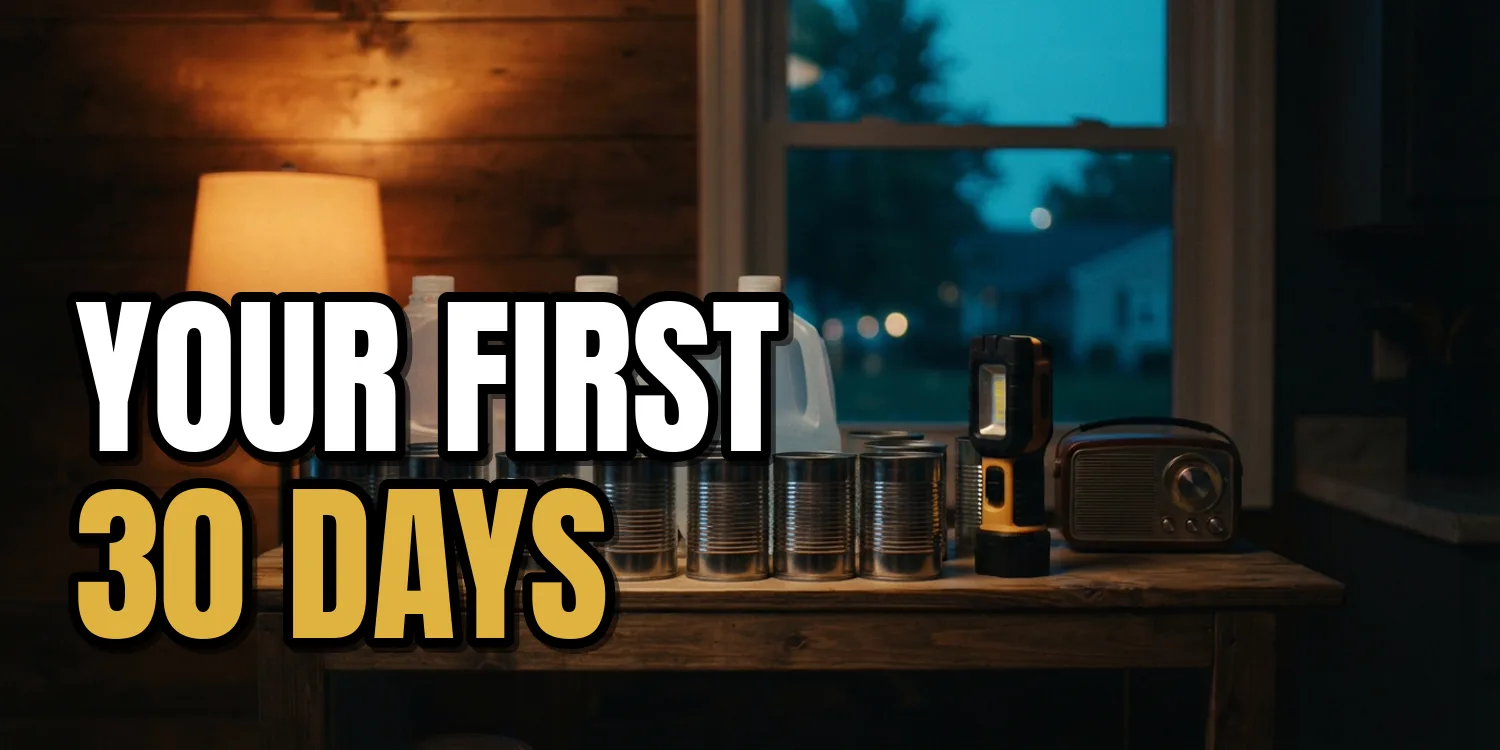
Most people who decide to start prepping hit the same wall within an hour of searching. There are bunker forums, freeze-dried buckets with a thousand servings, solar kits, radio licenses and EMP shielding, and none of it says what to do on a Tuesday evening with a normal budget. (If the acronyms are the first hurdle, our prepper vocabulary guide explains SHTF, BOB, FIFO and the rest.) This page is the order I would give a household that has nothing set aside yet, broken into four weeks. It links every section of this site at the point where you would need it, so it doubles as a map.
The order comes from what fails first in the emergencies American households actually live through. A long power outage after a storm is far more likely than any collapse scenario, and it takes out water pressure on a well, refrigeration, light, phones and heat within a day. A plan that gets a family through two weeks without power covers most of what follows. Everything here is drawn from public sources a reader can check, chiefly Ready.gov's basic kit list and its power outage guidance, plus what experienced preppers tell newcomers on their own sites and forums.
Why most beginners start in the wrong place
FEMA runs a yearly household survey on disaster readiness, and its 2023 round, summarized by the Risk and Resilience Hub, shows the usual pattern. About half of adults said they felt prepared. The share who had assembled or updated supplies rose to 48 percent, while the share signed up for alerts and warnings fell from 46 to 36 percent. Planning with neighbors came last of all the actions, at 12 percent.
That gap is the beginner's trap in one survey. Buying things feels like progress, so new preppers buy. The free steps, such as alerts, a written plan and a conversation with the people next door, get skipped because nothing arrives in a box. So the first week below is mostly free work, and the shopping waits until week two.
Week one: water, a plan on paper, and alerts
Store water before anything else
Ready.gov's floor is one gallon per person per day, for drinking and basic sanitation, and its kit list asks for several days of it. A family of four therefore needs 12 gallons just to reach three days. Water matters first for two reasons. A person lasts days without water and weeks without food, and households on a private well lose their pump the moment the power drops. Where those rough times mislead is laid out in what the rule of threes gets right and where it misleads.
You do not need to buy containers this week. Wash out sturdy plastic soda or juice bottles, fill them from the tap, cap them, write the date on each one and put them somewhere cool and dark. Skip milk jugs, which get brittle and leak. Our guide to storing water for a two-week grid-down covers the full amounts, rotation and purification once you are ready to go further.
Write the plan down
A plan in someone's head fails when that person is at work and the kids are at school. Spend one evening on four questions: where the family meets if the house is unsafe, who the out-of-area contact is that everyone calls or texts, who picks up which child, and what each person does in the first hour of a blackout. Our walk-through on writing a family emergency plan takes those questions one at a time, and our printable plan builder turns the answers into a sheet for the fridge and a card for every wallet.
Sign up for alerts
Check that emergency alerts are switched on in each phone's settings, then find your county's own alert service on its emergency management page, since many counties text and email warnings separately from the national system. This is the step the FEMA survey says people dropped, and it takes ten minutes. A weather radio comes later in the month, but phone alerts cost nothing today.
Make a note of your shutoffs
Find the main water valve, the electrical panel and the gas meter, if you have gas. Ready.gov lists a wrench or pliers to turn off utilities for a reason. Tie the wrench to the gas meter or hang it beside the panel, and show every adult in the house where each one is.
Week two: two weeks of food you already eat
Long-term buckets and freeze-dried meals are where new preppers spend the most money soonest, and they can wait. The cheaper and more useful start is a deep pantry: more of the canned and dry food the family already eats, rotated through normal meals so none of it expires. Kris of City Prepping puts the method plainly in his beginner guide: "When you go to the store, grab a few extra cans of food."
Aim for two weeks this month. Write down a fortnight of simple meals that need no refrigeration, such as pasta with jarred sauce, rice and canned beans, oatmeal, canned chili, tuna and crackers, peanut butter, and work out the cans and boxes that adds up to. Our stockpile calculator does the arithmetic for food, water, fuel and batteries from the size of your household. Then buy a few days' worth on each grocery trip. Store it inside the living space, not in the garage, where summer heat shortens shelf life, and put new cans at the back so the oldest get eaten first.
Two details catch beginners. Salty canned food makes everyone drink more, so mix in lower-sodium choices. And a manual can opener is on Ready.gov's list because an electric one is useless in exactly the week you will open the most cans. The stockpiling section holds the rest, including why grocery shelves empty so fast, in our piece on why people stockpile food.
Medicine and cash
Ready.gov notes that about half of all Americans take a prescription medicine every day. Ask the doctor or pharmacist whether you can refill a few days early so a small buffer builds up over time. Our guide to an emergency medication stockpile explains what insurers and pharmacists usually allow. Then put some cash in small bills somewhere safe in the house. Card readers and ATMs need power and a network. How much to keep is covered in how much cash to keep at home.
Week three: light, warmth and a radio
This is the week that turns a pantry into a household that can sit out a blackout. Ready.gov's kit includes a flashlight, spare batteries and a battery or hand-crank radio, ideally one that also receives NOAA Weather Radio. Give every person their own flashlight or headlamp, since one shared light means nobody can do anything at night. Leave the candles in the drawer. The Red Cross power outage page says it in four words: "Use flashlights, not candles."
For the radio, our page on NOAA weather radio explains which features matter, with the tone alert and county coding at the top of the list. If the family will be split up, the communications section covers what to use when cell service fails, starting with the family communication plan and moving on to FRS, GMRS and ham radio once the basics work.
Heat, cold and carbon monoxide
Plan for the season you live through. In a cold climate, decide now which single room the family would live in and gather the blankets and sleeping bags that would go there. Our guide to staying warm without power in winter covers the rest. Whatever the climate, buy a carbon monoxide alarm with battery backup for every level of the house. Ready.gov is blunt here: generators, camp stoves and grills run outdoors only, at least 20 feet from doors and windows, and a gas oven never heats a home. Our carbon monoxide safety guide explains why the first two days of an outage are the dangerous ones.
Hold off on a generator. It is the biggest purchase on most beginner lists and the one most often bought too early, before there is fuel stored, a safe place to run it or a clear idea of what it should power. When you get there, generator sizing for a house works it out from your own appliance labels. The whole grid-down living section, including the power outage checklist, is built around this week's work.
Week four: first aid, the house and a bag by the door
First aid
A drugstore first aid kit is mostly small bandages. Add what treats a real injury: gauze, a pressure bandage, medical tape, gloves, and the household's own pain relievers and allergy medicine. Our home trauma kit checklist lists the rest and points to hands-on courses, which teach more than any kit. If anyone in the house depends on oxygen, a CPAP or another powered device, that plan comes before any other purchase, and our CPAP and home oxygen blackout plan starts with the calls to make. The medical section holds both.
The house
Home security for a beginner starts with what you already own. Walk the outside of the house at night and look at it the way a stranger would: unlocked side gates, a weak strike plate on the front door, a sliding door anyone can lift out of its track. Our guides to reinforcing a front door and securing a sliding glass door fix the two most common gaps for little money. The home defense section goes on from there to a layered home defense plan and to keeping your preps private, which matters more as the pantry grows.
A bag by the door
Most families ride out an emergency at home, but a gas leak, a fire or an evacuation order gives a family minutes. Pack one bag per adult with water, a change of clothes, copies of IDs and insurance papers, medicine for a few days, a light, cash and phone chargers. The r/preppers wiki points newcomers who drive to something similar for the car: snacks, water, cash, spare clothes, jumper cables and a first aid kit. Our bug-out bag checklist and get-home bag checklist list both in full, and bug in or bug out helps decide which one a given emergency calls for. Everything is gathered in the bug-out section.
What to read about the bigger threats, and when
New preppers often arrive through a headline about an EMP, a solar storm or the economy, and it is tempting to start there. I would read about them after the month above, because nearly everything a family does to prepare for them is what the four weeks already built: water, food, light, a radio, a plan and a house that can stand on its own for two weeks. The threats section is where to go next. It covers whether the power grid is going to shut down, the difference between an EMP and a solar flare, building a Faraday cage, and preparing for economic collapse and civil unrest, each with what changes beyond the basics.
Day 30: test it with the breaker off
The month ends with a drill. Pick a weekend evening, warn the household, switch off the main breaker for a few hours and live on what you have built. You will learn more from that evening than from another week of shopping: which flashlights have dead batteries, whether anyone remembers where the water valve is, how the kids react to a fully dark house, whether the garage door has a manual release anybody can find. Our grid-down drill sets one up step by step, and the family plan section is where the results go, along with an emergency plan for elderly parents if you look after someone who lives alone.
After the drill, write down what failed and fix those things first next month. Then the second month is about depth: stretching two weeks of food and water to a month, storing fuel safely, and choosing a way to talk to family when the phones are down.
Where I would start tonight
I'd start with the water and the plan, both before buying a single thing. Fill a few clean bottles from the tap tonight and spend twenty minutes at the kitchen table on the meeting place and the out-of-area contact. They are the two items a blackout tests in its first hour, and they cost nothing.
The one purchase I would push to the top is a carbon monoxide alarm with battery backup for each floor. Food and gear decide how comfortable a long outage is, and a heater or generator in the wrong place is the mistake that ends one. Everything else on this page can be built a little at a time from the grocery budget you already have.
Frequently asked questions
How much does it cost to start prepping?
What should a beginner prepper buy first?
Is two weeks of supplies enough?
Do I need to tell people I am prepping?

Written by
Walt Brenner
Grid-down threats, home security and family plans
Walt Brenner is the pen name of the writer who covers grid-down threats, home security and family emergency plans for Dark Grid Prep. He draws on FEMA and Ready.gov guidance, utility and government reports, manufacturer manuals and long-running prepper forums, and he says plainly where those sources disagree. His beat is the household: what a family of four in a suburb or on a rural lot should have, know and do before the lights go out.
Last checked 2026-11-15
Comments
No comments yet. Questions and your own experience are welcome.
Thank you. Your comment will appear once it has been reviewed.